High Efficiency & Labor-Saving
Hand peeling decides how many people a shrimp room needs. Every extra tonne of raw material means another pair of hands, and those are the hardest hands to keep: peeling is cold, wet, repetitive work, and the people who are quickest at it are usually the first to move on. Meat processing machinery changes that arithmetic. One operator feeds the sheller and watches the discharge, while the rest of the crew moves to trimming, quality checks, packing and freezing — work where their time adds value instead of disappearing into a bucket of shells.
Speed is only half of the gain. Manual peeling varies with the person, the hour and the batch, so a fast peeler on the first shift and a new starter on the second give you two different products. The sheller runs the same cycle whoever is standing at the feed, which means the peeled shrimp going into your trays or your freezer look and weigh the same at the start of the day and at the end of a double shift.
That steadiness carries downstream. Evenly peeled shrimp portion and pack more predictably, fewer batches need rework or downgrading, and complaints about shell fragments drop when the work is no longer done by tired hands at the end of a long run. When a large order lands, you add running hours instead of hiring and training a temporary crew, which is usually what decides whether a tight delivery date is met. In the quiet season the machine simply stops, with no crew to keep on.
Product Overview
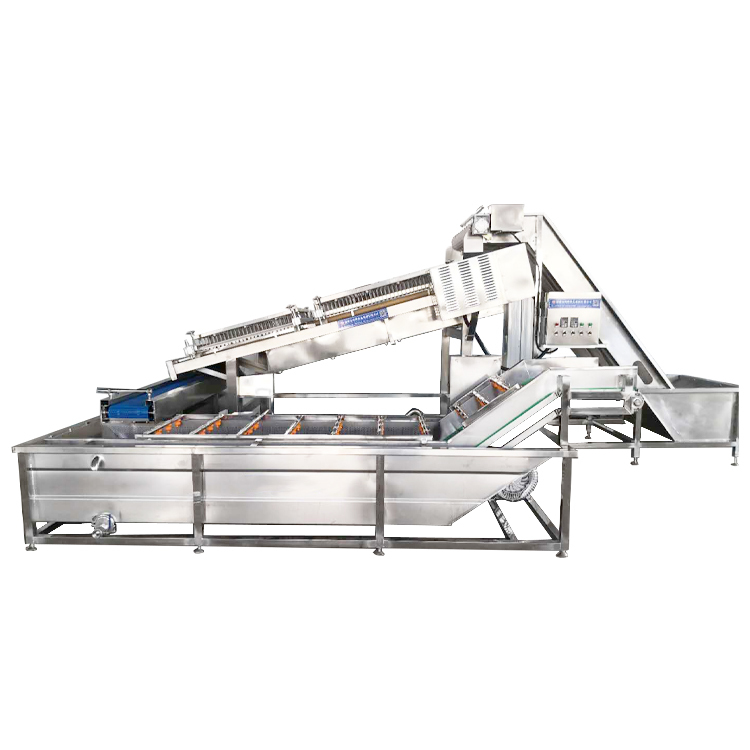
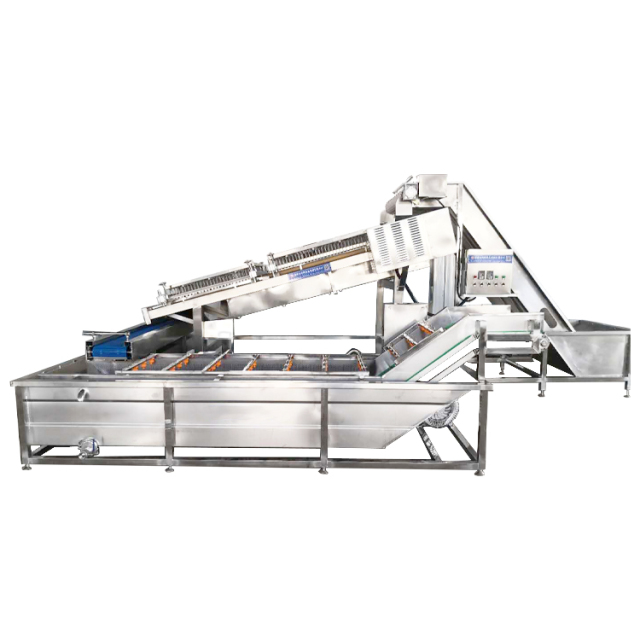
The Automatic Shrimp Peeling Machine (Model 50) takes raw, shell-on shrimp in at one end and returns peeled shrimp at the other, with the shelling done by the machine instead of at a bench. On a seafood floor it replaces the peeling bench: the row of tables, bowls and knives most rooms start with becomes a single machine station. The build is aimed at rooms that peel shrimp most days. The working parts sit on one rigid frame, the surfaces the shrimp meet are stainless steel, and the control panel keeps start, stop and running checks within reach of the person at the feed. Getting a run going is a matter of switching on, checking the discharge and feeding at an even rate; there is no recipe to program and no warm-up cycle to wait through. If your supply arrives frozen, thaw it fully and drain it before peeling — the unit is set up for raw product, not for breaking down frozen blocks. Rooms that also handle fish, meat or prepared foods use it as a dedicated peeling station within a wider seafood and meat processing equipment layout rather than as a multi-purpose machine. - One station instead of a bench — raw shrimp arrive at a single feed point and leave peeled, so draining, trimming and packing can be arranged around one position instead of spread along a row of tables. - Push-button control — start, stop and running checks sit on the machine panel; nothing has to be programmed between batches, and the routine is short enough to teach at a shift handover. - A single rigid frame — drive, peeling section and discharge are carried on one base, so the machine holds its alignment and does not need re-setting after it has been moved aside for cleaning. - Standalone or in-line — the sheller runs on its own without extra modules, or slots between existing steps when you are ready to connect it to a longer process; it does not need the rest of the line to be in place first, which is not true of every piece of commercial meat processing equipment. - Spares from the same supplier — wearing parts and replacements come from the team that supplies the machine, so a worn component does not leave you chasing a local agent's stock.
Peeling Process & Grading Control
- Start from raw, drained shrimp. Work from raw shrimp at working temperature. Frozen supply must be fully thawed and drained first — this is a raw-shrimp machine, not a block breaker.
- Run it empty for a moment. Switch on, confirm the peeling section turns freely and the discharge is clear before any product goes in.
- Feed at a steady rate. A continuous, even stream is what the machine is designed around; tipping in a tub and waiting produces exactly the uneven result you bought the machine to avoid.
- Let the grading system set the pace. The automatic grading system aligns and meters the shrimp so each one meets the peeling section the same way. The operator's job is supply, not judgement.
- Keep one grade in the machine at a time. Mixing sizes in a single run is the most common cause of uneven peeling — sort by grade before you start.
- Watch the discharge, not the feed. Peel quality shows at the outlet. Shells coming through usually mean the feed is too heavy; shrimp passing unpeeled usually mean the grade or the condition of the raw material has changed.
- Stop clean. Stop feeding first and let the machine clear itself before switching off, so no shrimp sit in the peeling section between runs.
Installation, Cleaning & Maintenance
- Check the layout before the floor is marked. Set the machine footprint against your room plan: you need clearance on the feed side for an operator and a tub, and on the discharge side for the take-away table or trolley.
- Move and level the unit. Bring it in on a pallet, set it down and level the frame so the machine sits without rocking; a level base is what keeps vibration out of the room.
- Let your electrician connect it. Check the supply against the nameplate before the first start, confirm the direction of rotation, and only then put product through.
- Do a dry run. Run the machine empty, listen for anything unusual and watch the discharge and shell outlet, so you know what normal looks like before shrimp go in.
- Run a small first batch. Feed a modest quantity, check the peel and settle on a feed rate, then move to full production.
- Clean after every run. Rinse the food-contact surfaces, clear shell and membrane from the peeling section and the discharge, drain the machine and leave covers open to air. Shell left in the machine overnight is the usual source of odour and failed inspections.
- Check it weekly. Look over the wear parts, check fasteners and inspect the areas the daily rinse does not reach; a short written log makes it easy to spot a part that is starting to go.
- Hold a small spare set. Ask your meat processing equipment suppliers which parts are worth keeping on the shelf for your running hours — waiting on a single component is what turns an afternoon's downtime into a week's.
- - Grade 304 where the shrimp touch — the peeling section, frame and working surfaces are SUS304 stainless steel, chosen for salt, moisture and constant wash-down. It will not chip or flake into product the way a painted finish can. - Built for a wet room — shrimp rooms are hosed, not dusted. Smooth surfaces shed water instead of holding it, and a drainage outlet under the working area carries wash water away rather than letting it pool around the base. - No strip-down to clean — nothing has to be unbolted before the operator can reach the working area, so the clean-down between shifts is a wet routine rather than a maintenance job. - Few places for shell to collect — shell and membrane left in a machine overnight are what cause smells and failed inspections; the working area is open enough for the operator to see and clear what the last run left behind. - Built to outlast a light-duty alternative — stainless construction and a simple mechanical layout mean fewer parts to replace and less time lost to breakdowns over years of daily use. - Easier to write into a hygiene plan — a machine that can be cleaned and inspected on a fixed routine is simpler to document and simpler to defend when someone audits the room.
Seafood Processing Plants & Shrimp Peeling Lines
In a working seafood plant the sheller is one link in a chain, not a gadget on its own. It usually sits after thawing, washing and any first sort, and before whatever decides your finished product — a final grade, a chill step, freezing or packing. That position matters in both directions: upstream, everything should deliver an even, drained stream of raw shrimp; downstream, the next step should be ready to take peeled shrimp at the rate they arrive, so the buffer between them stays small and nothing sits warm waiting. Commercial meat processing equipment bought piece by piece rarely lines up perfectly, and a standalone station is the easiest thing to fit around what is already there.
Plan the room around two sides of the machine. The feed side needs space for the operator, a tub or a short conveyor and a clear path for raw shrimp coming in; the discharge side needs a table, trolley or chute that carries peeled shrimp away without a second handling. Shells leave separately and want their own bin close by — a full shell container is the most common reason a peeling line stops mid-shift.
One operator per shift runs this unit comfortably, with someone bringing raw material and taking peeled product away. That staffing level holds across long runs and multiple shifts, which is the point of the machine: the line stops depending on how many experienced peelers turned up. Where volume grows, plants usually add a second unit alongside rather than replace this one, so leave yourself the floor space when the room is laid out.
Plants that buy from several meat processing equipment suppliers usually want the same thing from a new machine — that it drops into the room without forcing a re-plan of the line. Keep the sheller in its own washable zone on the raw side of the partition, with peeled shrimp crossing to the clean side once, and it fits most layouts without argument.
Frozen Food Factories, Catering & Wholesale Suppliers
- Breaded and coated shrimp producers — coating clings to a cleanly peeled, undamaged surface, and even sizing keeps batter pickup and crumb coverage consistent from batch to batch.
- Frozen ready-meal factories — peeled shrimp go into recipes by weight, so steady output lets a batch be planned without weighing and re-weighing at the end of the line.
- Central kitchens and catering operations — peel to order for the day's menu instead of buying peeled shrimp in whatever grade happens to be available.
- Wholesale peeled shrimp and export suppliers — repeatable grade and yield across shipments, with the machinery test report to hand when a customer asks how the product was processed.
- Frozen food plants adding a shrimp line — where the sheller joins existing commercial meat processing equipment, it can be run as a self-contained station with its own cleaning routine and its own operator.
- Bringing peeling in-house — plants that currently buy peeled shrimp can peel their own raw material instead and control grade, freshness and yield at the point where the shrimp arrive. - Peak-season volume — when landings or orders spike, running extra hours on the machine beats recruiting and training a temporary peeling crew. - Contract and job-shop peeling — businesses that peel for several producers can change grade and customer between runs without changing equipment. - Mixed-product rooms — where shrimp shares space with other commercial meat processing equipment, the sheller works as its own washable station that can be isolated and cleaned between products. - Trial runs and new products — small batches to test a new peeled line, a new supplier's shrimp or a new pack size before committing volume to it.
Specifications
| Product Name | Automatic Shrimp Peeling Machine |
| Model | Model 50 |
| Capacity | 30–50 kg (raw shrimp) / hour |
| Material | SUS304 Stainless Steel |
| Power | 1.5 kW |
| Voltage | 220V / 380V (customizable) |
| Machine Size | 1800 × 1400 × 1650 mm (slight tolerance, subject to the actual product) |
| Operation | Fully automatic, with automatic grading system |
| Quality Check | Video outgoing inspection + machinery test report |
Flexible Power & Verified Quality
Voltage is the detail that most often holds up a shipment of meat processing machinery, so it is the first thing we settle. This unit is offered in 220V or 380V, and the voltage can be customized to match the supply in your building — whether that is a single-phase workshop feed or a three-phase plant supply. Send your electrician's figures — voltage, phase and plug type — before the order is fixed, and the machine is built to them rather than adapted afterwards. Plants running in more than one country often order the same model in two voltages so that spares, training and operating routines stay common across sites. Quality is checked before the machine is packed, not after it lands. Every unit is run and filmed, and it ships with a machinery test report. Buyers who source from overseas meat processing equipment manufacturers rarely get to walk the floor before dispatch; the inspection video is the closest practical substitute for standing in front of the machine, and the report gives your maintenance and quality teams something concrete to sign off against on arrival. Read the video for the things a photograph hides — how the peeling section runs, how the discharge behaves, whether the build matches what you ordered.
Ordering & Delivery
- Start with the shrimp. Tell us the size grades you peel, whether the raw material arrives fresh or frozen and how much you need to get through in a shift — that is what decides whether one machine covers your output. - Confirm the power details. Voltage, phase and plug type from your electrician; the build follows those figures rather than being adapted after arrival. - Ask what is included. The standard build, what a spare set would contain for your running hours, and any feed arrangement you want discussed at the same time. - Ask for the specification sheet and layout drawing. You will need both to get the machine approved internally and to mark the floor before it arrives. - Agree the shipping terms. Lead time, packing and freight are confirmed with your sales contact once the voltage and configuration are fixed, and they depend on the destination and the terms you work to. - Plan for support after arrival. Spare parts and after-sales support come from the supplier directly. Ask which parts to hold for your running hours and who to contact when something needs attention; when you are buying from meat processing equipment suppliers overseas, that arrangement matters as much as the machine itself.
Technical Support & Model Matching
Tell us your output, product size and local voltage, and our technical team will match you to the right model from the manufacturers in our supply network. We have been sourcing food processing machinery since 2017 for buyers across Europe, North America and beyond. Before shipment we confirm configuration and any light OEM or ODM requirements; after delivery we stay with you through installation and commissioning guidance, operator training, fault diagnosis and spare-part support, with a 7×24 response line.
FAQ
What is the production capacity of this shrimp peeling machine?
It is rated at 30–50 kg of raw shrimp per hour. Treat that as a working band: smaller grades and careful runs sit near the lower end, while well-graded, evenly fed shrimp push towards 50 kg/h. Tell us the volume you need to clear in a shift and we can confirm whether one unit is enough.
What material is the machine made of?
It is built in SUS304 stainless steel — the frame, the panels and the surfaces the shrimp actually travel across. Grade 304 is the usual choice for wet seafood rooms because it stands up to salt water, brine and constant humidity far better than painted or mild steel: the surface does not rust through and flake into product the way cheaper frames do.
A few practical points are worth knowing before you order. The material matters most where shrimp actually touch it — the feed, the peeling section and the discharge — so ask which components are stainless and which are food-grade polymer or elastomer; some internal grippers and guides are deliberately made from a softer material rather than steel. Stainless is also easy to clean but not indestructible: rinse shrimp residue and salt off before they dry, use the dilution your chemical supplier recommends for stainless, and keep abrasive pads, steel wool and carbon-steel brushes away from panels, because they leave iron particles that spot and pit the surface.
If the machine stands in a room that also handles other proteins, keep the same wash-down discipline you already use along the line, and dry the surfaces after cleaning instead of letting water sit in corners and along the base. Where your food-safety documentation needs material confirmation, ask for it with your order so it arrives with the machine rather than after commissioning.
What power supply does it need?
It runs on 220V or 380V, and the voltage can be customized to suit your plant. Send your supply details — voltage, phase and plug type — and the machine is built to match before dispatch rather than being adapted on site.
How does the machine keep peeling results consistent?
An automatic grading system takes over the aligning and metering that a hand-peeler does by feel, so each shrimp meets the peeling section the same way. Results then depend on the feed rather than on who is operating: keep the stream even and keep one grade in the machine at a time.
What are the machine dimensions?
Approximately 1800 × 1400 × 1650 mm (length × width × height). There is slight tolerance and the final figure is subject to the actual product, so confirm it against the drawing for your order before the floor is marked.
How do you verify quality before delivery?
Every machine is run and filmed before it is packed, and it ships with a machinery test report. Use the video to confirm the build and the way the machine runs, and file the report with your own quality records when the unit arrives.
Does it peel raw or cooked shrimp?
It is built for raw shrimp. Cooked shrimp behave differently in any peeling machine, and frozen supply needs to be fully thawed and drained first, so tell us what state your shrimp arrive in before you order.
Can it be added to a line that already runs other equipment?
Yes. It is a standalone station: the sheller does not need any additional meat processing machinery to run, and it can be placed between your existing prep steps and your freezing, coating or packing line. What it does need is a drained, level position with clear space on the feed and discharge sides.
What should I confirm about my shrimp before ordering?
Three things decide the setup: the size grades you peel, whether the shrimp come in fresh or frozen, and the volume you need to clear in a shift. Send those with your voltage details and we will confirm the configuration and whether one machine covers your output.