Facebook

Commercial Vegetable Cutter Buyer's Guide

Vegetable Cutter Machine

Commercial Vegetable Cutter Buyer's Guide

A food factory, central kitchen or canteen buys a vegetable cutter machine for one reason: to turn raw produce into a repeatable cut at a volume hand-preparation cannot match. This guide shows how to specify a vegetable cutting machine by raw material, throughput and output shape, using the No.V012 frame as the reference build: 1–60 mm adjustable cuts, 300–1000 kg/h on roots and a published FOB band of US $1500–2000 per set.

300–1000 kg/hRoots capacity
1–60 mmAdjustable cut size
US $1500–2000FOB per set
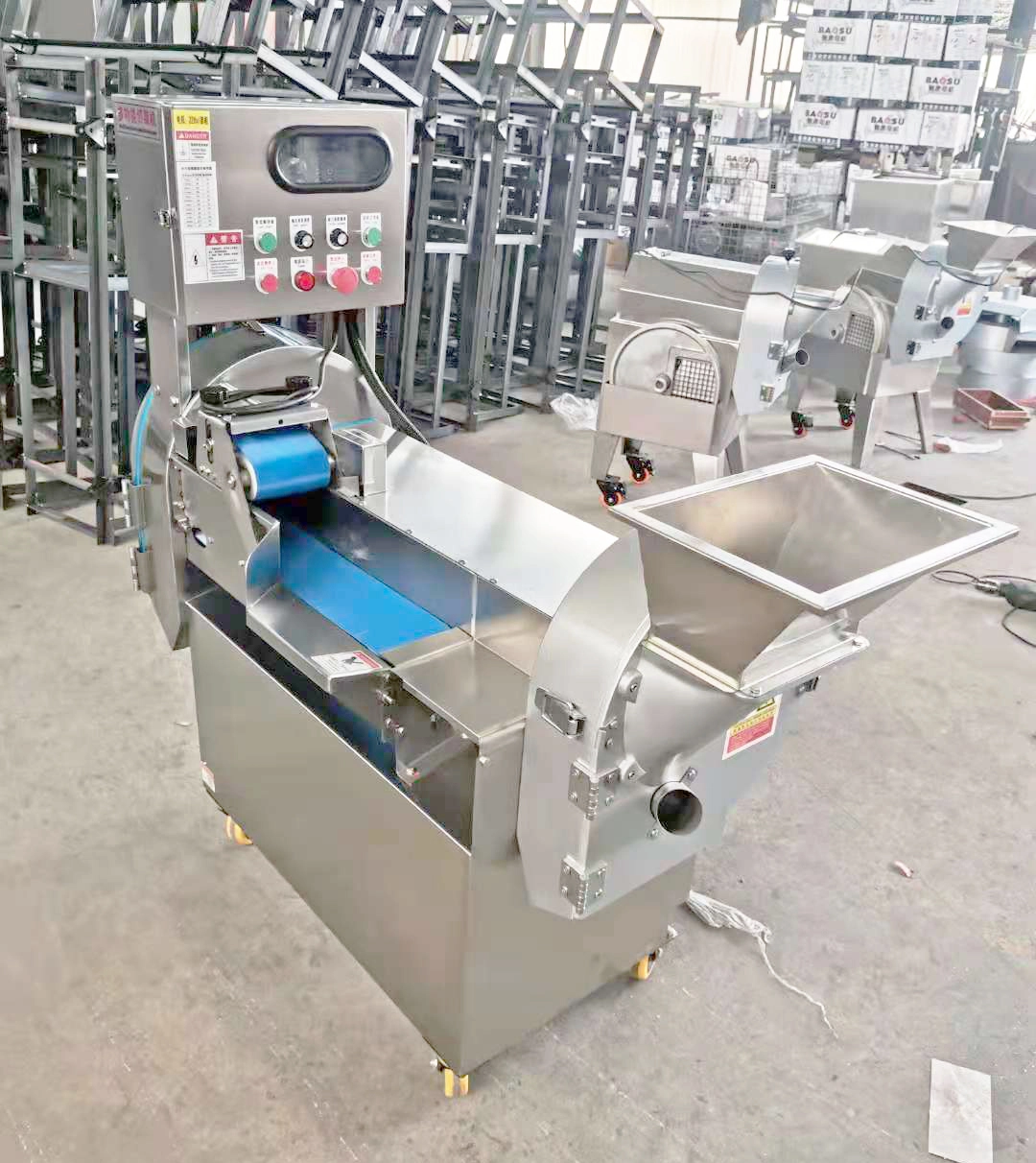
Multifunction Vegetable Cutter Slicer Dicer Machine Chopper Industrial Price

Raw material first

Match the machine to what you actually feed it

The reference model publishes two capacity figures because it handles two different physical problems. Read the column that matches your produce mix before you read any other number on this page.

Leafy and stalk input

  • Long onion, garlic, celery, cabbage and similar leaf or stalk crops.
  • Listed leaf vegetable capacity: 600–1000 kg/h.
  • Conveyor belt speed and rotary knife speed are frequency-converted and independently controlled, so a light leaf is not dragged or crushed by a knife speed set for dense produce.
  • Buyer decision: if leafy prep is your bottleneck, ask for a trial on your own crop before you sign.

Bulb and root input

  • Turnip, potato, sweet potato, taro, onion, eggplant, apple, ginger, plus traditional Chinese medicine materials.
  • Listed roots capacity: 300–1000 kg/h — the lower of the two ratings.
  • Dense items run on the same frame and the same blade modules, so the roots figure is the one to plan your line around.
  • Buyer decision: size the machine on your heaviest root item, not on your lightest vegetable.
Why a single fixed speed struggles at both ends. When belt speed and knife speed are locked together, one setting has to serve a hollow celery stalk and a dense sweet potato at the same time. Dual-frequency modulation separates the two: belt speed and knife speed are adjusted independently through frequency conversion, which is why the model can publish separate roots and leaf vegetable ratings on one frame. Ask for a demonstration that changes one speed without touching the other — that is the feature you are paying for.
Multifunction Vegetable Cutter Slicer Dicer Machine Chopper Industrial Price
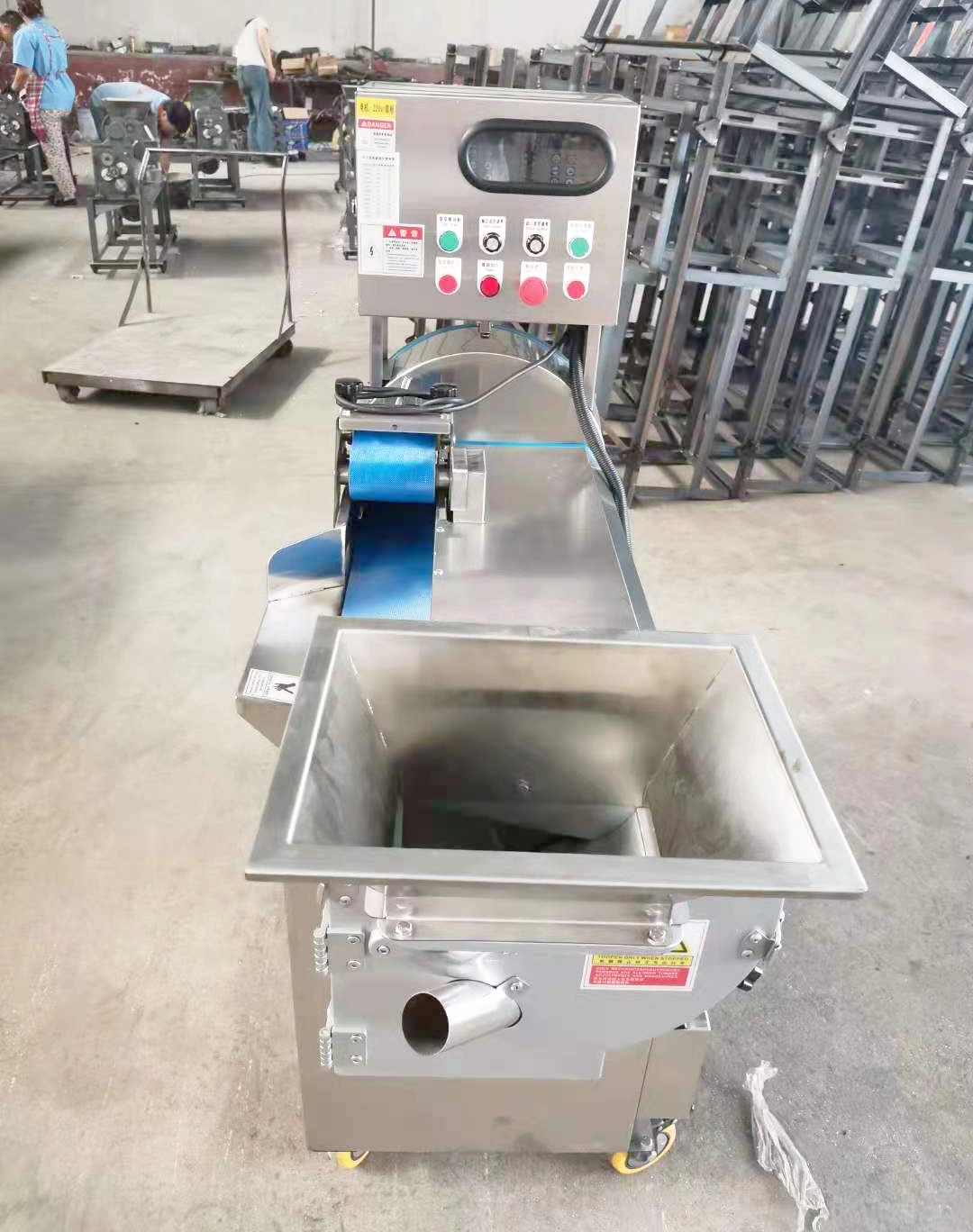
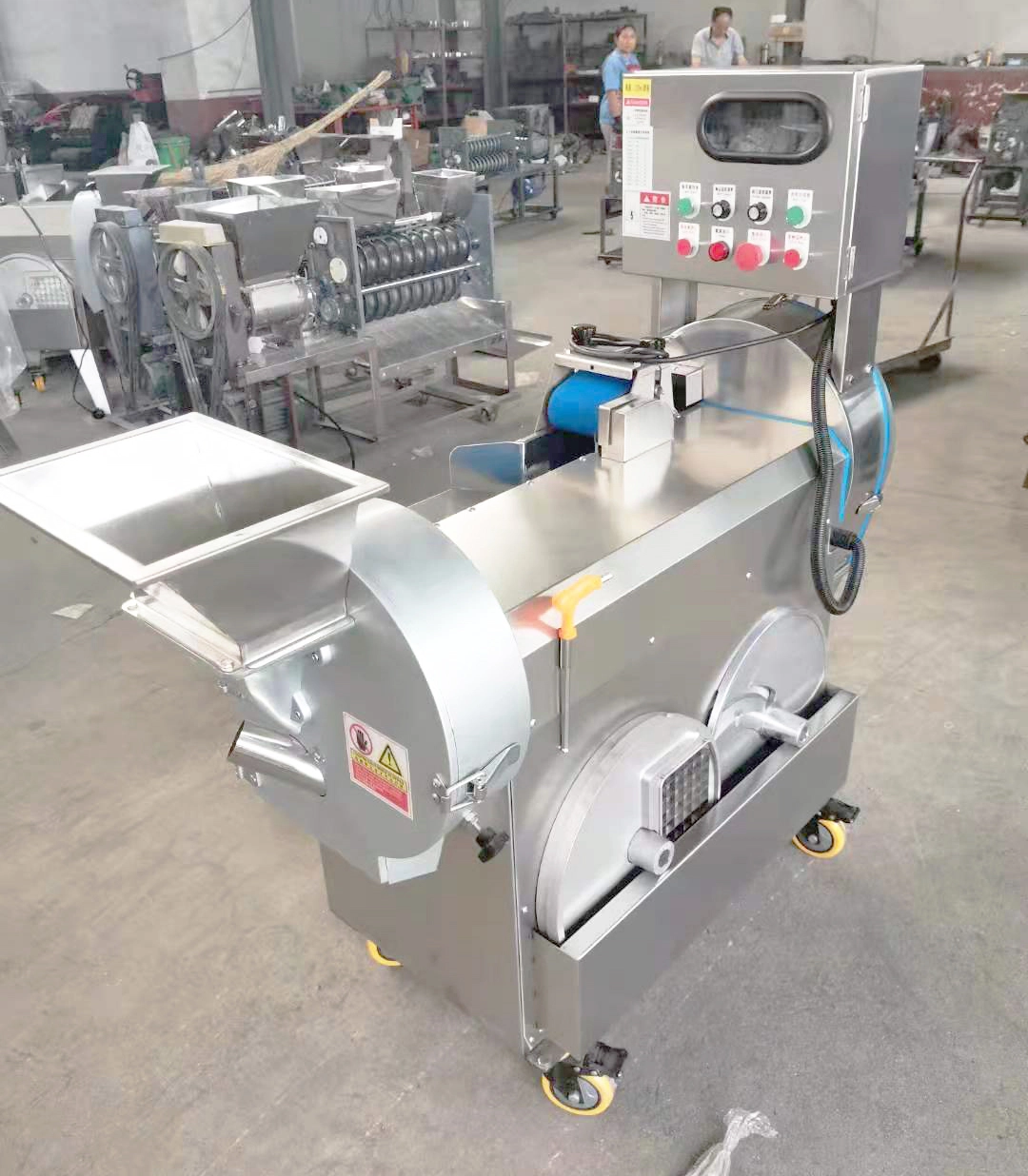
Model No.V012 — stainless steel frame, interchangeable blade modules, 1160 × 530 × 1300 mm.
1

Start with the raw material

Write down your top five inputs by weekly tonnage. If leafy or stalk crops are a meaningful share of the mix, you need independent belt and knife speed control, not a single fixed setting.

2

Fix the output shape

Decide the dice, slice, strip or shred you actually sell, and the size your customer accepts. Everything inside the 1–60 mm range is adjustable; slice thickness and dice size are made to order.

3

Size the frame

Compare your daily tonnage with 300–1000 kg/h on roots and 600–1000 kg/h on leafy crops. If your requirement sits above the top of the band, plan for two units rather than one overloaded one.

Capacity math

From kg/h to a shift you can staff

Rated capacity is an hourly figure; a kitchen plans by the day. The table below converts the roots rating into shift output so you can compare it against your own prep sheet.

Roots setting Per hour One 8-hour shift Two shifts (16 h) Read this row if…
300 kg/h 300 kg 2,400 kg 4,800 kg You prep up to roughly 2.5 t of root vegetables a day and want headroom for peaks.
600 kg/h 600 kg 4,800 kg 9,600 kg You run a mid-sized central kitchen or a prepared-food line with daily cut vegetable orders.
1,000 kg/h 1,000 kg 8,000 kg 16,000 kg You are sizing for a processing plant or a distribution centre supplying multiple kitchens.
How to read the result. These figures assume continuous feeding at the rated setting for the whole shift. Real output falls with loading gaps, blade changes and cleaning stops, so plan against 70–80% of the table value. Leafy crops follow the separate 600–1000 kg/h rating and usually run at the higher end because the material is lighter. On headcount, model the saving against your own knife-work crew: the machine replaces cutting labour, not peeling or washing, so the two steps either side of it still have to be staffed.

Output shape

Cut form and size matrix

Cutting shape on this model is listed as cube, slice and strip, with an adjustable size range of 1–60 mm. What each form means for your end product is a purchasing decision, not a footnote.

Cut form Size note Typical end product Changeover
Cube / dice Dice size made to order Prepared meals, frozen vegetable mixes, soup packs, canteen bulk Blade module swap
Slice Thickness made to order Stir-fry kits, salad lines, dehydration prep, pizza toppings Blade module swap
Strip Length adjustable Julienne for packing lines, French-fry style cuts, mixed vegetable packs Blade module swap
Shred Thickness made to order Coleslaw, dumpling and bun fillings, kimchi and pickling prep Blade module swap
Multifunction Vegetable Cutter Slicer Dicer Machine Chopper Industrial Price
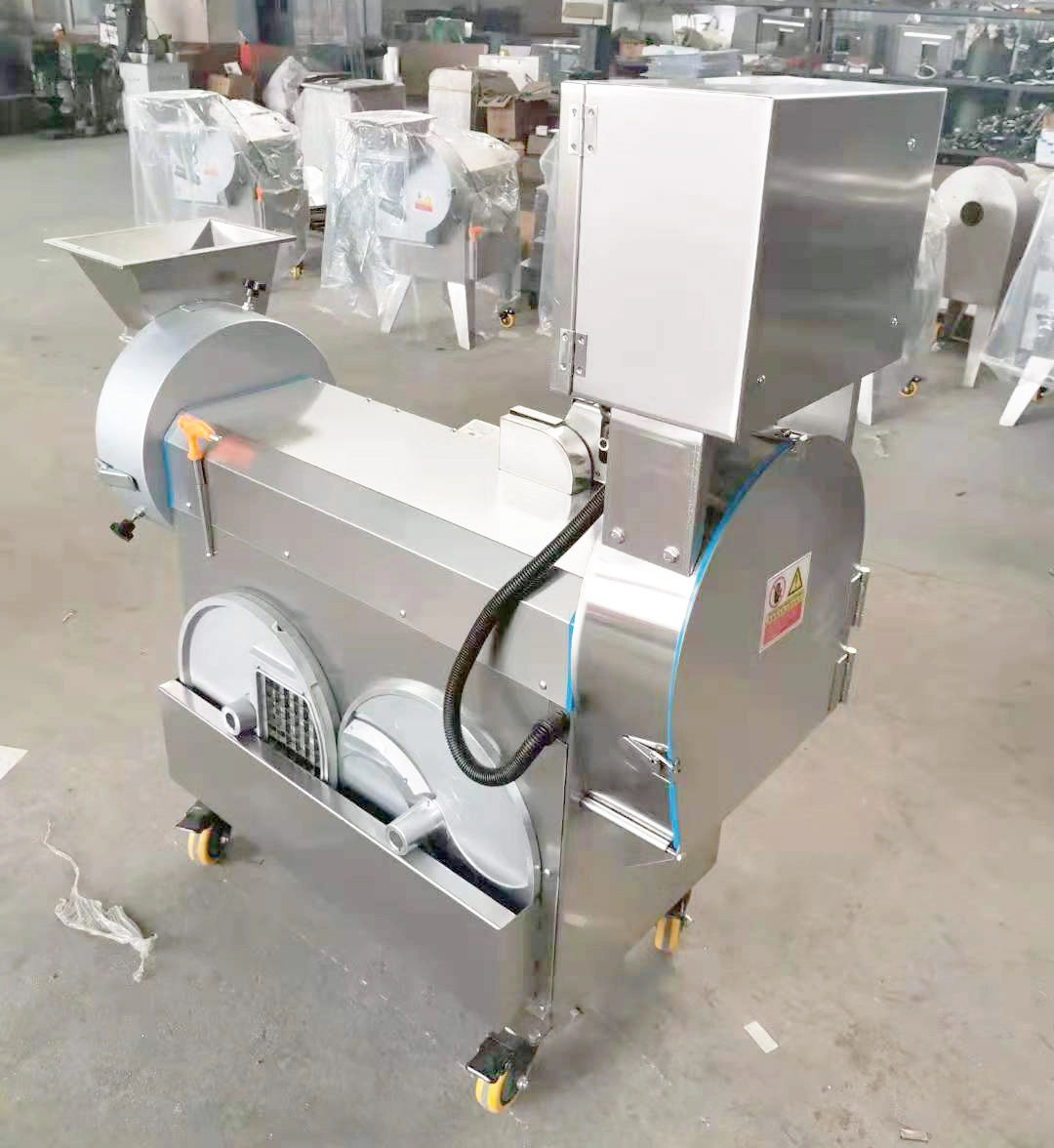
Interchangeable blades and adjustable cutting modules sit inside a compact footprint.
Buyer decision. Count the cut forms you will sell in a normal week, then ask how many blade modules ship with the quoted set. Slice thickness and dice size are made to order, so the exact sizes you specify are locked to the modules you receive — order the full set you need at the start rather than adding modules later, when freight and a second order will cost more than the blades.

Commercial terms

What moves the quote between US $1500 and $2000

A price band is more useful than a single figure, but only if you know which variables sit inside it. These are the items that shift a set from the bottom of the band to the top.

01

Blade modules and custom cut sizes

The quoted set includes the cutting modules supplied with it. Slice thickness and dice size are made to order, so each additional size is a separate module — and the single largest reason two quotes for the "same" machine differ.

Adds cost
02

Dual-frequency configuration

Independent frequency control of conveyor belt speed and rotary knife speed is a listed feature of this model. Confirm in writing that the quoted configuration includes it, because a machine without it cannot run both leafy and root work at their own settings.

As listed
03

Voltage and frequency

The listed specification is 220 V / 50 Hz with a 1.65 kW motor. If your site runs a different supply, raise it before the order is placed — a re-specified motor and control set is a change, not a standard option.

Ask first
04

Order quantity

Minimum order is 1 set and supply ability is listed at 200 sets per month. Single sets sit at the top of the band more often than multi-set orders, so ask for a quantity break if you are equipping more than one line.

MOQ 1 set
05

Export packing

Shipment is in a wooden case. Confirm whether export packing sits inside the FOB price or is added, and check the case dimensions against your receiving bay before dispatch.

Confirm
06

Port and freight route

Loading is offered from Shanghai or Qingdao. The two ports give different sailing schedules and inland costs, so price the freight to your destination port before you approve the order.

Varies
07

Payment terms

L/C, D/A, D/P, T/T, Western Union, MoneyGram and Paypal are all listed. Term choice affects bank charges and the supplier's risk, so it can shift the final number even when the machine price is unchanged.

Negotiable

Reference specification

The No.V012 build, in full

Every figure below belongs to one reference configuration. Use it as the baseline column when you compare quotes from other suppliers — a missing line is as informative as a different number.

Item Specification
ModelNo.V012 — Multifunction Vegetable Cutter Cutting Chopper Slicer Machine
Cutting shapeCube, slice, strip
Cutting size1–60 mm, adjustable
Roots capacity300–1000 kg/h
Leaf vegetable capacity600–1000 kg/h
Voltage220 V / 50 Hz
Power1.65 kW
Machine size1160 × 530 × 1300 mm
Machine weight140 kg
FrameStainless steel, food-contact compliant construction
PackageWooden case
FOB priceUS $1500–2000 / set
Minimum order1 set
Supply ability200 sets per month
PortShanghai, Qingdao
Payment termsL/C, D/A, D/P, T/T, Western Union, MoneyGram, Paypal
Multifunction Vegetable Cutter Slicer Dicer Machine Chopper Industrial Price
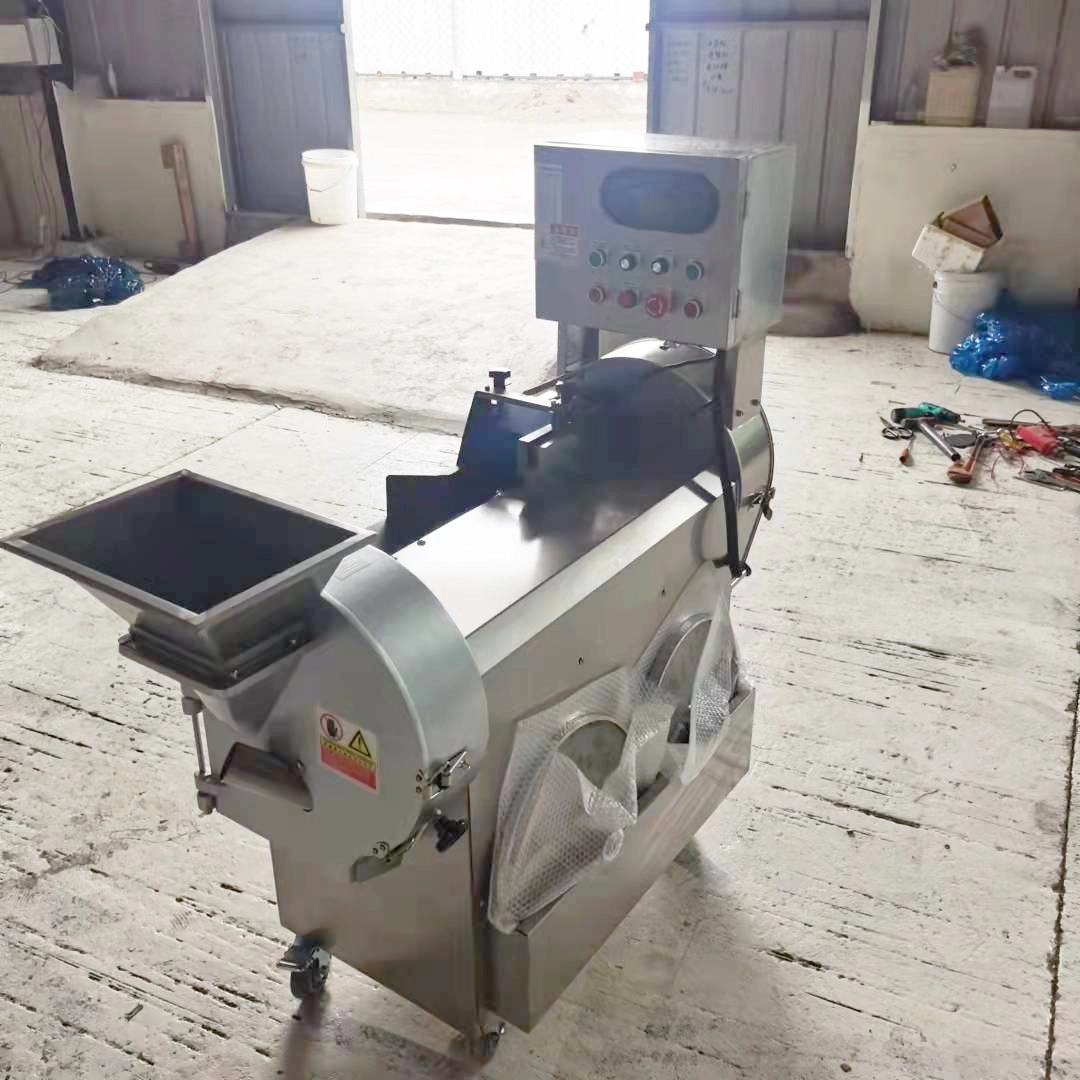
Compact 1160 × 530 × 1300 mm frame at 140 kg — plan the floor position before delivery.
Buyer decision. The two capacity rows are the only place on this page where a number can be misread. 300–1000 kg/h is the roots rating and 600–1000 kg/h is the leafy rating; if a competing quote offers "1000 kg/h" with no material qualifier, ask which input that figure was measured on.

Scenario to specification

Find your operation, then the spec you need

Four common buying situations, each paired with the specification to request and the decision that follows from it.

School or staff canteen, 800–1,500 meals a day

Spec to request
Roots duty around 300 kg/h, one dice size plus one slice thickness, 220 V / 50 Hz single-phase-matched configuration as listed.
Buyer decision
You sit at the bottom of the FOB band. Spend the difference on the second blade module rather than on a bigger frame you will not fill.

Prepared-food or stir-fry kit production

Spec to request
Dice and strip modules made to the sizes your retail pack specifies, within the 1–60 mm adjustable range, plus dual-frequency control.
Buyer decision
Cut consistency is the product, so lock the exact dice size in the order — made-to-order sizes are the reason this build competes on prepared food.

Central kitchen with a mixed menu

Spec to request
Dual-frequency modulation with independent belt and knife speed control; both the 300–1000 kg/h roots and 600–1000 kg/h leafy ratings.
Buyer decision
Insist on a demonstration that changes knife speed while the belt stays put. That single test tells you whether the machine can serve both ends of your menu.

Distributor or multi-site rollout

Spec to request
Repeatable configuration across units: same voltage, same blade module set, wooden-case export packing, Shanghai or Qingdao loading.
Buyer decision
Test the supplier against the listed 200 sets per month supply ability and ask for the payment terms you intend to use before you commit to a schedule.

Deployment

What installation actually involves

The machine is 140 kg in a wooden case and needs 1.65 kW. These are the practical checks that decide whether it goes in smoothly.

  • Floor space. 1160 × 530 × 1300 mm plus clearance for feed and discharge. Measure your doorways and the route from the loading bay before the case arrives.
  • Power. 1.65 kW on the listed 220 V / 50 Hz supply. Confirm your distribution board and cabling before dispatch, not after.
  • Cleaning routine. The frame is stainless steel and the build is described as easy to clean, with simplified maintenance and intuitive controls. Plan a blade-off wash between product changes.
  • Blade modules. Interchangeable blades and adjustable cutting modules mean changeover is a module swap, not a rebuild. Decide how many module sets you need at day one.
  • Line integration. The machine is described as compatible with conveyor systems and packaging lines. Confirm the hand-off geometry with the supplier before you build the line around it.
  • Export packing. Shipment is in a wooden case. Check the case footprint against your receiving dock and any lift access.
Multifunction Vegetable Cutter Slicer Dicer Machine Chopper Industrial Price
High-speed, low-noise, low-vibration operation with frequency modulation to reduce damage and waste.

Quote your cut sizes, not just the machine

Send your produce mix, the dice or slice sizes you sell, and your daily tonnage. You will get a configuration matched to your line, with the blade modules, packing and loading port set out before you commit.

Related Reading

Three notes to help clarify product requirements before contacting the supplier.

How Does Double Frequency Modulation Control Vegetable Cut Size?

Conveyor speed and blade speed work as a team in commercial vegetable cutting, and understanding their relationship explains why cut size changes.

Read article

Vegetable Slicer and Dicer Machine for Prepared Food Production

Prepared-food and fresh-cut production depends on matching recipe cut forms, blade sets, and line connections before a cutter specification is quoted.

Read article

How to Match a Commercial Vegetable Cutting Machine to Central Kitchen Output

Matching a commercial vegetable cutting machine to central kitchen output means matching peak-shift capacity, material mix, and site fit rather than chasing one headline speed.

Read article

Frequently Asked Questions

what information is shown for this product?

review the product details, images, and specifications presented on the official product page.

where can i check the intended application?

use the application and use-case information published on the official product page.

which specifications should i confirm before ordering?

confirm the specifications and options listed for the exact product variant before placing an order.

where can i check available options?

check the official product page or ask the supplier about options shown for the selected product.

how can i request product information?

use the official contact or inquiry path provided on the site.

what should i include in an inquiry?

include the product page, intended use, required quantity, and any specifications you need the supplier to review.

Leave a message
Name *
Email *
Phone
Subject
Message *
Verification code *
Click to verify