Facebook

Industrial Cherry Pitter Buyer Evaluation Guide

Industrial Cherry Pitter Buyer Evaluation Guide

Industrial Cherry Pitter Buyer Evaluation Guide

Choosing equipment for a cannery, freezing plant or juice line usually starts with one question: is the company quoting you a real cherry pitter machine manufacturer or an intermediary passing along someone else’s quotation? The answer shapes lead times, spare-part access, and how easily the machine can later be re-tuned to your fruit. Comparing a second cherry pitter machine supplier is just as useful, because side-by-side offers reveal which specifications are documented and which are simply repeated. This guide turns the PH-1 documentation into a buyer framework: what to verify, what to measure, and what to ask before you sign.

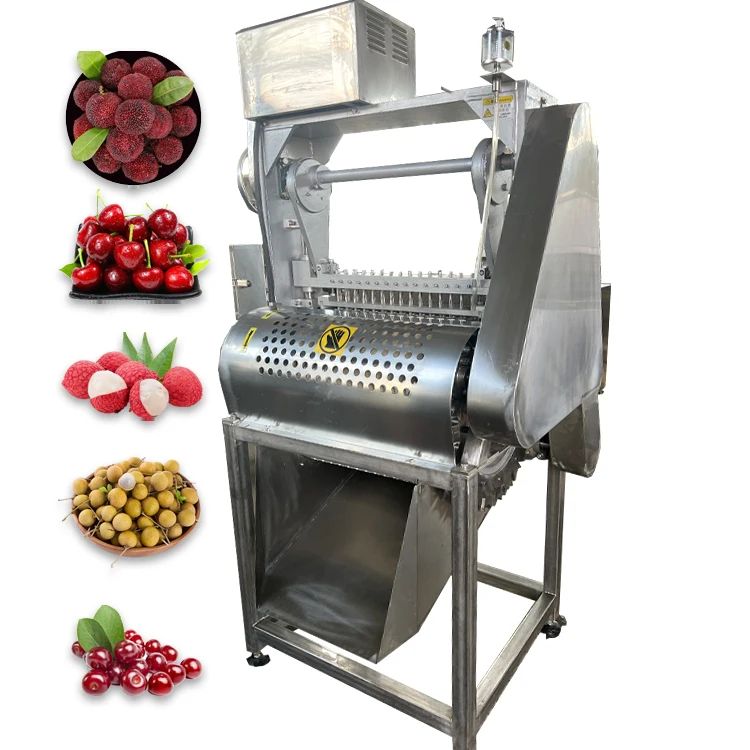
Industrial Electric Cherry Pitter Machine Cherry Seed Remover Machine
Model PH-1
Frame material 304 stainless steel
Yield 250–500 kg/h
Power supply 380V / 50Hz
Motor power 1.5 kW
Net weight 800 kg
Dimensions 1000 × 800 × 1800 mm
Listed price $7,800.00 (confirm at quote)
Verification

How to Tell a Manufacturer From a Trading Supplier

Entity-level checks come before price negotiation. Two suppliers can send near-identical PDFs on the same afternoon, but only one of them can answer what is inside the frame.

Cherry pitter machine build detail showing stainless steel frame and transmission parts

Signals of a factory-direct manufacturer

Model numbering stays consistent across documents — PH-1 appears in both the specification table and the price block, alongside the internal reference F008-2.

The build list is published rather than summarised: a 304 stainless steel frame and appearance, with the transmission part, eccentric support plate, bearing, reducer and motor made of carbon steel.

The drivetrain design is explainable: the drum uses a unique aluminum tube intended to hold pit-removal performance without deformation, and the frame is described as modular for scalability.

There is a named engineering contact who can discuss customization for specific fruit dimensions instead of forwarding a generic catalogue.

Answers a trading supplier usually cannot give

The grade of the parts that touch fruit, and the difference between the 304 stainless steel exterior and the carbon steel transmission components.

Why the drum is an aluminum tube, and what that choice does for deformation resistance under continuous industrial workloads.

Which supplier made the reducer, eccentric support plate and bearings — and what happens when one of those parts wears out.

What the after-sales routine actually covers: technical assistance, maintenance guidance and quality inspections.

  • Ask for a walkthrough. A live or recorded production-floor walkthrough should show the frame, drum and drive assembly, not only a finished machine.
  • Name three components. Reducer, eccentric support plate and bearings should be identifiable items with an explanation of their role.
  • Cross-check the model number. The same model reference should appear on the quotation, the specification table and the price block.
  • Test customization depth. Send a fruit diameter range and see whether the reply discusses fit, or only re-sends the standard brochure.
  • Red flag: no factory access, no component traceability, model numbers that change between emails, and after-sales described only as “warranty available”.
Capability fit

Standard PH-1 vs. a Customized Build

Fit-to-application is where a buyer either saves money or creates a bottleneck. Read each row as a question for your own fruit and your own line.

Buyer question Standard PH-1 Customized path Decision rule
Will it handle my cherries? The standard model suits most common cherry sizes. Customization options can be discussed for specific fruit dimensions. Measure 20–30 fruit diameters from your own crop before contacting anyone.
What happens to the drum? Drum designed with a unique aluminum tube, resistant to deformation damage. Ask the supplier to document the changeover procedure if your fruit is outside the usual range. Request the drum handling and replacement procedure in writing with your quotation.
How much capacity do I need? Documented yield of 250–500 kg/h. Capacity scaling and the move toward an automated line are discussed within the documented range. Size to your peak intake hour, not your daily average, and keep headroom.
Manual or automated line? Compatible with both manual and automated workflows. Modular build accommodates scalability and automation compatibility. Share your line layout drawing before ordering so discharge height and clearance are agreed.
Will it fit into my plant later? Design facilitates easy maintenance and integration into existing lines. Scaling decisions are easier when the frame and drivetrain are already modular. Buy for the next two seasons, not the next two weeks.
Aluminum tube drum and frame detail of the industrial cherry pitter machine

The drum is the customization anchor

The page states the drum uses a unique aluminum tube chosen for deformation resistance. When fruit dimensions move outside the usual range, this is the first component to discuss — and the first question a serious supplier will ask you about.

Scaling is a frame decision

Because the build is described as modular, expanding toward an automated workflow is a line-planning conversation rather than a machine replacement. Raise it before the order, not after installation.

Spec comparison

Turn Each Specification Into a Verification Question

A number on a quotation means nothing until you know what to check. Use this layer for every supplier you shortlist, including the well-known ones.

Documented PH-1 value Verification question Red flag if missing
Model PH-1 (reference F008-2) Does the same model number appear on the quotation, spec table and price block? Model code changes between documents.
304 stainless steel frame and appearance Which surfaces are 304 stainless steel, and which are carbon steel? “Stainless steel” with no grade stated.
Yield 250–500 kg/h Is the range application-based, and what fruit size was it tested on? A single fixed number with no test conditions.
380V / 50Hz Does this match your site supply, or is a transformer required? Voltage left to “be confirmed later”.
1.5 kW motor Is the reducer and motor combination rated for continuous industrial duty? Power rating absent entirely.
Net weight 800 kg Can your floor carry a concentrated point load of this machine? Weight not disclosed before shipping.
1000 × 800 × 1800 mm Is there clearance for loading, discharge and maintenance access? Footprint given only as an approximate sketch.
Food-contact parts in 304 food-grade stainless steel Which components actually contact the fruit, and what are they made of? Food-contact material never specified.
Industrial Electric Cherry Pitter Machine Cherry Seed Remover Machine
Food safety

Quality, Compliance and Food-Contact Evidence

In fruit processing, the material list matters more than the paint finish. These are the claims worth putting in writing before a purchase order is issued.

Cherry pitter machine food-contact stainless steel and drive assembly detail

Food-contact surfaces

All food-contact components use 304 food-grade stainless steel, according to the product documentation. Ask for the component list so you know exactly which parts are covered.

Structural and transmission materials

The frame and appearance are 304 stainless steel, while the transmission part, eccentric support plate, bearing, reducer and motor are carbon steel. Knowing this split helps you plan inspection and lubrication.

Corrosion and deformation resistance

The build is described as corrosion resistant and not susceptible to deformation damage, with the aluminum tube drum supporting consistent pit removal during uninterrupted operation.

After-sales quality routine

Support includes quality inspections, technical assistance and maintenance guidance. Ask how each is delivered once the machine is on your floor.

1Specification confirmation against your fruit profile
2Material verification of food-contact components
3Assembly of frame, drum and drivetrain
4Quality inspection before dispatch
5Installation guidance on site
6Technical assistance and maintenance guidance
Installation

Installation and Line-Integration Readiness

Most delayed start-ups trace back to site preparation rather than the machine itself. Confirm these five points with your electrician and layout engineer before shipment.

  • Stable power supply. The machine requires a stable 380V/50Hz supply. Verify phase, breaker rating and cable run before the crate is opened.
  • Solid, level floor. With a net weight of 800 kg, the floor must be solid and level to carry the point load without settling.
  • Footprint and access. Plan around 1000 × 800 × 1800 mm, plus clearance for fruit loading, discharge and maintenance access.
  • Manual or automated connection. The machine is compatible with both manual and automated workflows, and the modular build accommodates scalability and automation compatibility.
  • Support during commissioning. Installation guidance, technical assistance and maintenance guidance are part of the offer — schedule them with your order.
Cherry pitter machine positioned for line integration and installation planning
Scenario matching

Scenario to Specification: Which PH-1 Facts Matter Most to You

The same machine is read differently by a cannery, a jam producer and a pilot line. Match your scenario to the fact that should drive the purchase decision.

Industrial electric cherry pitter machine for canning freezing and juice pre-processing

Canning and freezing lines

Product fact: used in cherry processing facilities for canning and freezing as pre-processing pit removal, with a documented yield of 250–500 kg/h.

Buyer decision: size the machine against your peak intake hour, then confirm the food-contact material list for your audit file.

Fruit juice and jam production

Product fact: positioned as a preparatory machine for uniform pre-processing speed and consistent removal quality.

Buyer decision: ask how consistency is measured, and pair the machine with fruit grading upstream so drum performance is not blamed for mixed fruit sizes.

Seasonal or manual operations

Product fact: designed for straightforward operation and low maintenance, with compatibility for manual workflows.

Buyer decision: prioritise training and maintenance guidance over automation upgrades in the first season.

Automated lines and future expansion

Product fact: modular build accommodates scalability and automation compatibility, and the design facilitates integration into existing lines.

Buyer decision: agree discharge height, footprint clearance and control interface with your line integrator before ordering.

Request for quote

Build an RFQ That Gets a Useful Answer

A short, structured enquiry gets a precise quotation. Send these four items and you will be able to compare responses line by line.

  1. Fruit profile. Cherry variety, average diameter range, and a photo of 20–30 representative fruit. This drives fit and any customization discussion.
  2. Target throughput. Your required kg/h against the documented 250–500 kg/h range, stated for the peak hour rather than the daily average.
  3. Site and line data. Confirmation of a stable 380V/50Hz supply, floor condition, available footprint around 1000 × 800 × 1800 mm, and whether the workflow is manual or automated.
  4. Commercial scope. Delivery destination, preferred Incoterm, spare-parts expectations, installation guidance needs, and after-sales support requirements.

Customization questions about specific fruit dimensions, drum fit and capacity scaling can be raised directly with the supplier’s engineer in the same enquiry, so the technical and commercial replies arrive together.

  • Email abbyph@hnzhph.com
  • Phone 0086 15324840809
  • Location Zhengzhou City, Henan Province
Industrial cherry pitter machine detail for quote and configuration review

Related Reading

Three notes to help clarify product requirements before contacting the supplier.

Sourcing a Cherry Pitter Machine Supplier for Custom Fruit Sizes

Matching a cherry pitter machine supplier for custom fruit sizes means aligning mold capability, fruit diameter data, output targets, local voltage, and acceptance conditions…

Read article

How Does a Continuous Cherry Pitter Remove Pits in Food Plants?

A continuous cherry pitter removes pits through a timed chain of infeed, fruit orientation, punch stroke, drum advance, and pit discharge rather than one repeated hand action.

Read article

Aluminum Tube Drum Geometry in Industrial Cherry Pitting Machines

In a continuous cherry pitter, the working drum decides whether every cherry meets the punch at the same point.

Read article

Frequently Asked Questions

What are the documented specifications of the ph-1 cherry pitter machine?

Model ph-1 (internal reference f008-2), 304 stainless steel frame and appearance, yield 250–500 kg/h, voltage 380v/50hz, power 1.5 kw, net weight 800 kg, dimensions 1000 × 800 × 1800 mm. The product page lists a price of $7,800.00; confirm current pricing and configuration when you request a quote.

Which parts of the machine touch the fruit?

All food-contact components use 304 food-grade stainless steel. Structural and drive components are different: the transmission part, eccentric support plate, bearing, reducer and motor are made of carbon steel, while the frame and appearance are 304 stainless steel.

Can the machine be customized for a specific cherry size?

The standard model suits most common cherry sizes. For specific fruit dimensions, customization options can be discussed with the supplier. The drum, built with a unique aluminum tube, is the component to raise first, and you should document the changeover procedure in writing.

What power supply and floor does the ph-1 require?

The machine requires a stable 380v/50hz power supply. Because the net weight is 800 kg, the machine must be placed on a solid, level floor that can carry the point load. Installation guidance is provided as part of the offer.

Which production environments is the machine used in?

It is used in cherry processing facilities for canning and freezing as a pre-processing pit removal step, and in fruit juice and jam production as a preparatory machine providing uniform pre-processing speed and consistent removal quality. It is compatible with both manual and automated workflows.

How do i request pricing, lead time and after-sales support?

Use the get a quote path on the product page or the contact page, and include your fruit profile, target kg/h, site power and line layout. After-sales support covers technical assistance, maintenance guidance and quality inspections. Direct contacts are abbyph@hnzhph.com and 0086 15324840809, based in zhengzhou city, henan province.

Leave a message
Name *
Email *
Phone
Subject
Message *
Verification code *
Verification Code