Product Overview
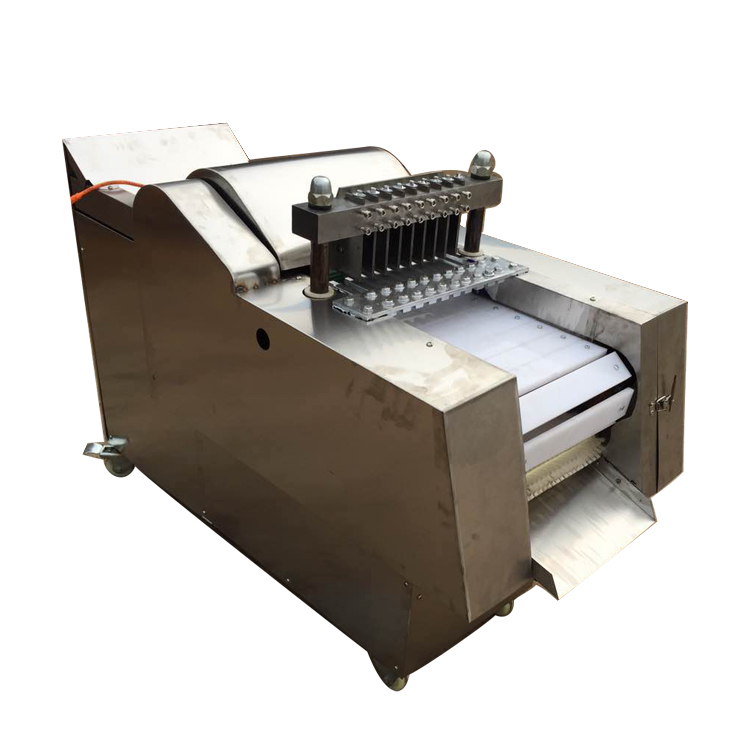
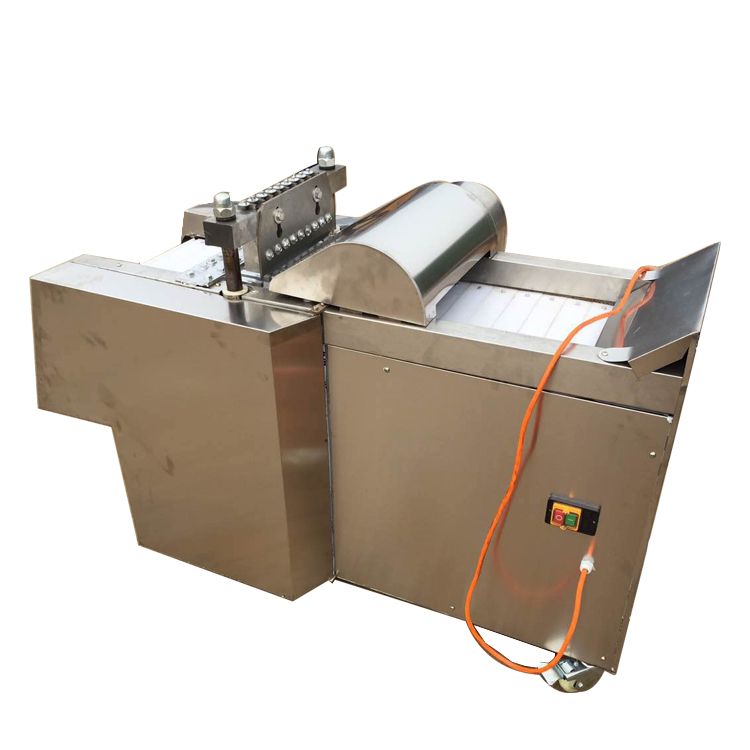
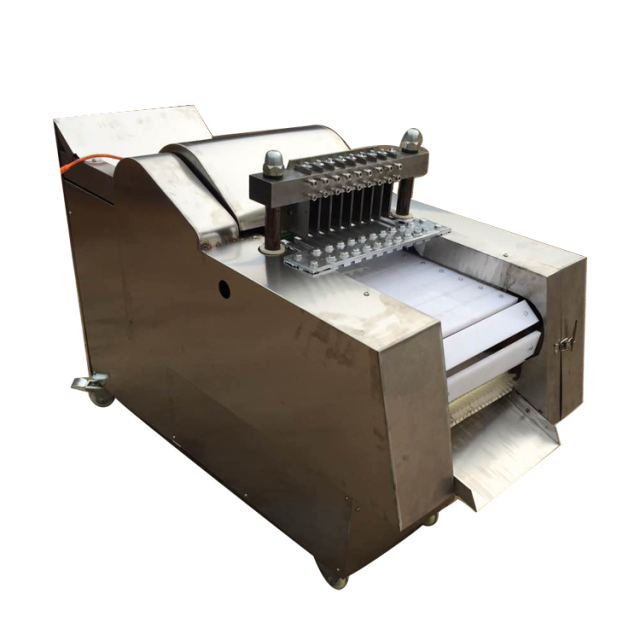
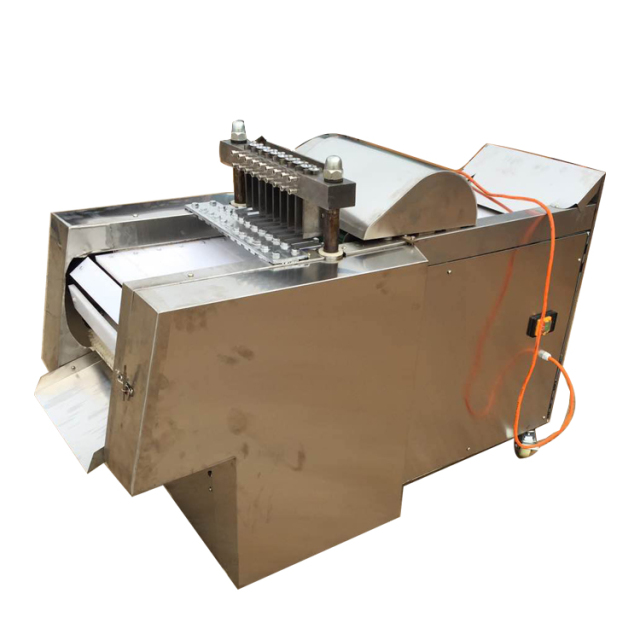
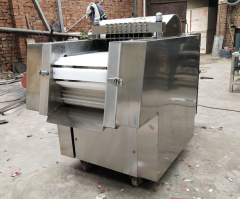
The PH-600C is a floor-standing cutter built for frozen product. Frozen blocks and bone-in pieces go through a blade head instead of a cleaver — the sort of work that otherwise ends with a bandsaw, a sore shoulder and a queue at the packing table.
It suits operations that have outgrown hand cutting but cannot justify a full dicing line: small and medium food processing plants, slaughter sites, inline processing rooms and supermarket meat departments. The bench it replaces is the corner where frozen product is broken down by hand because nobody wants to put a saw through bone.
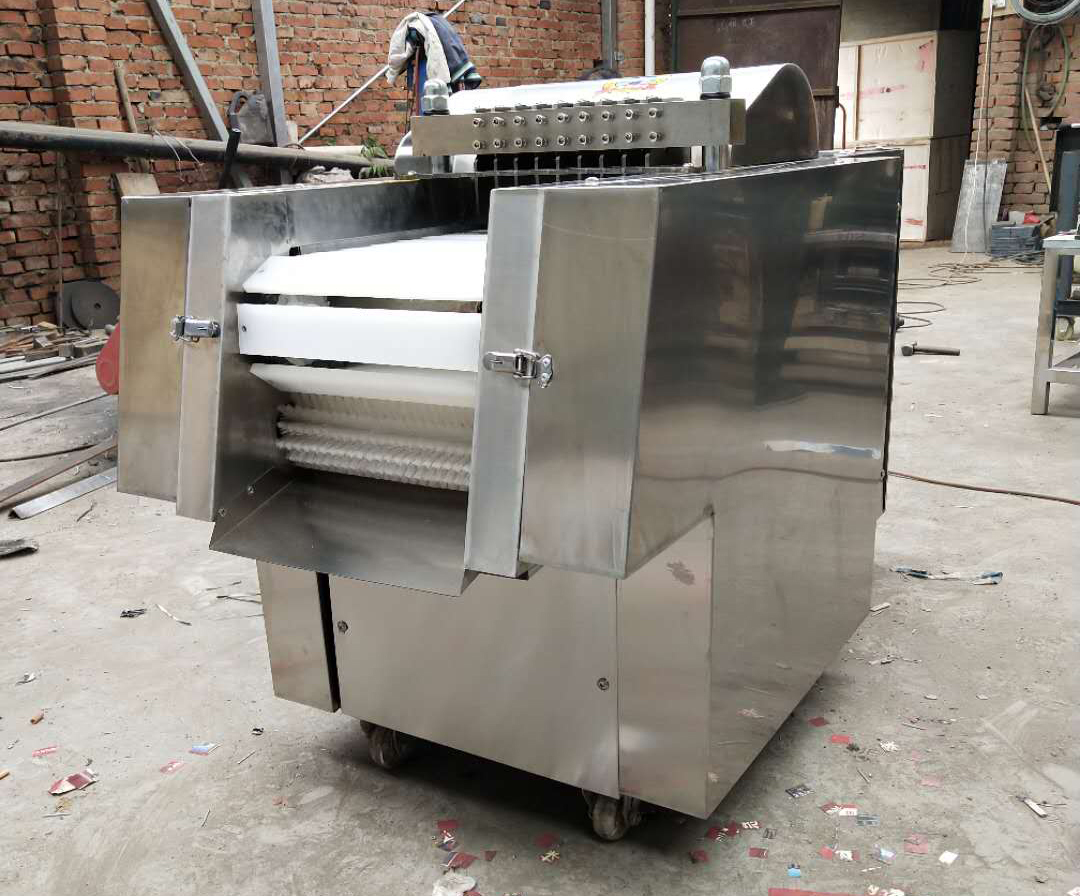
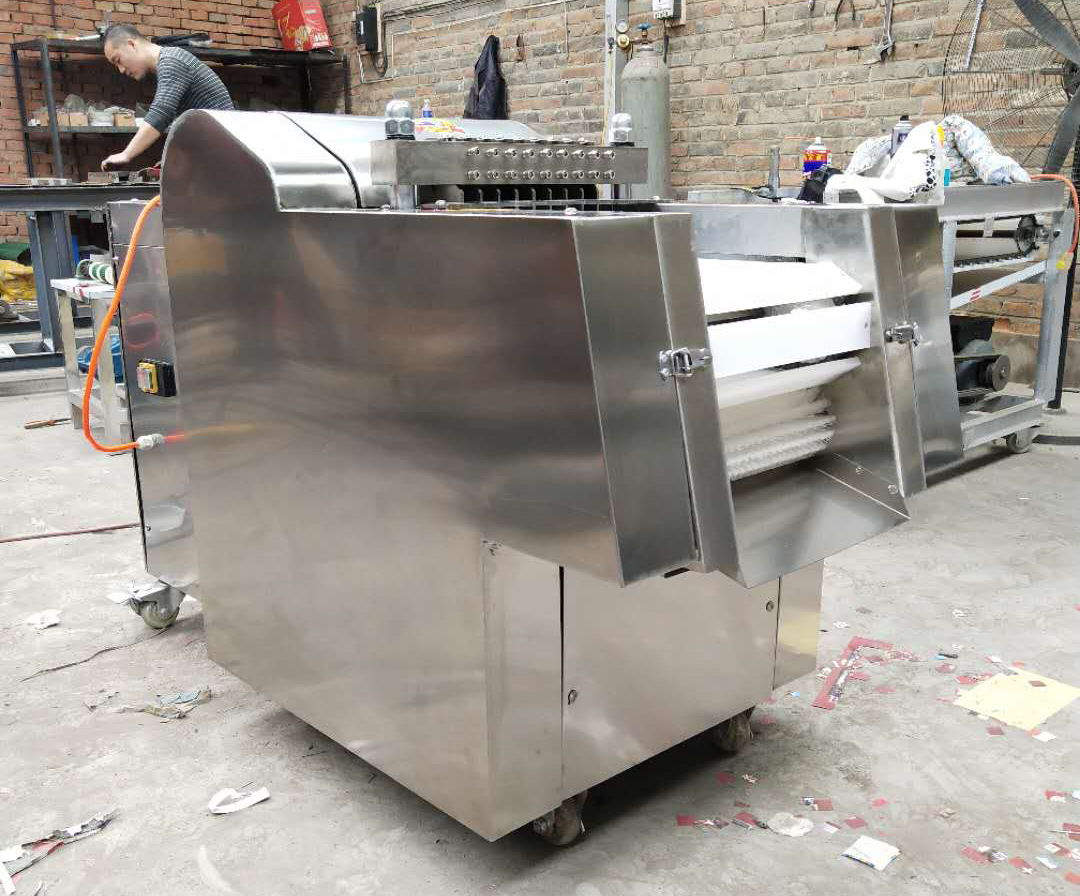
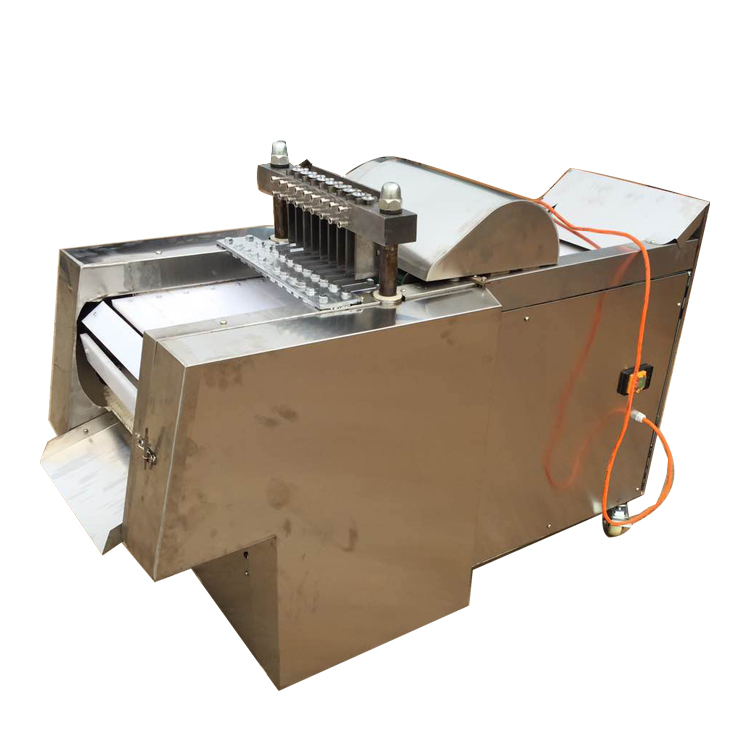
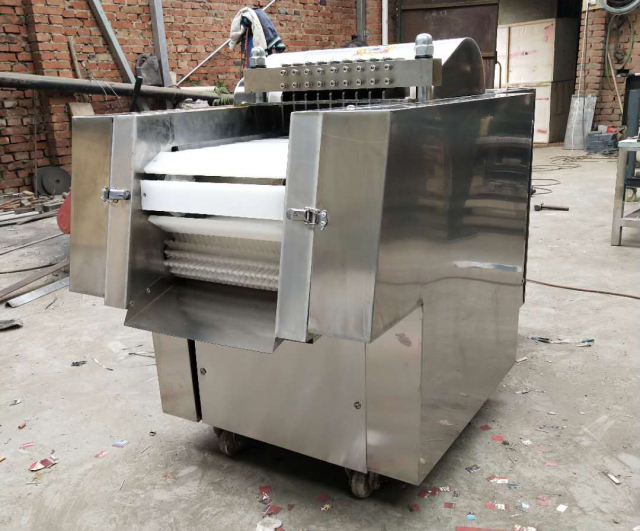
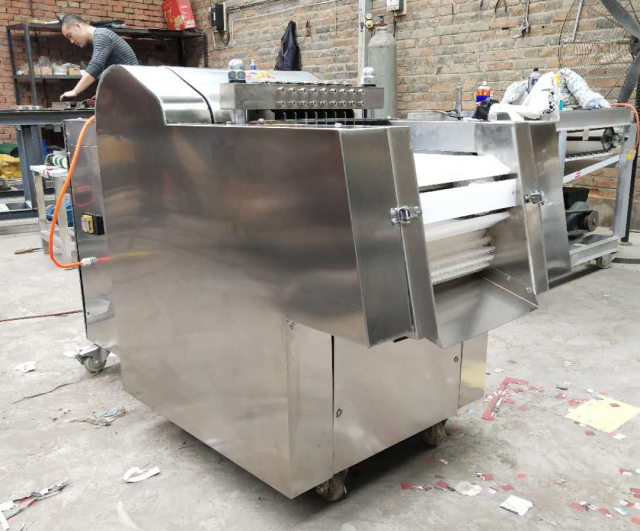
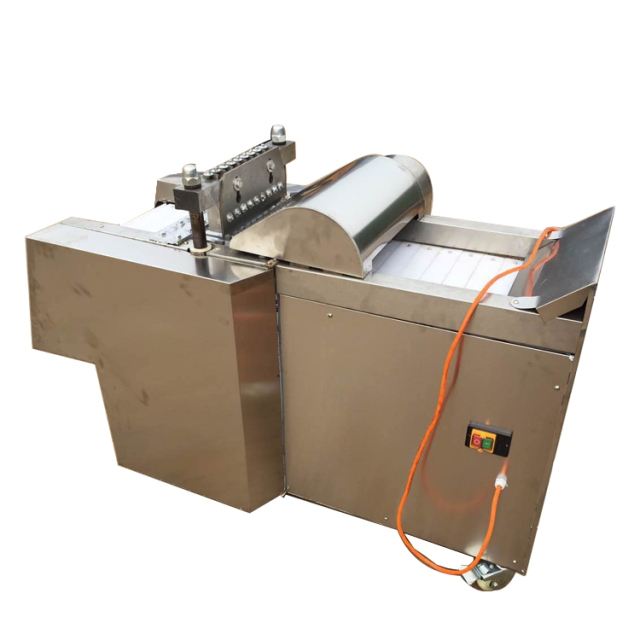
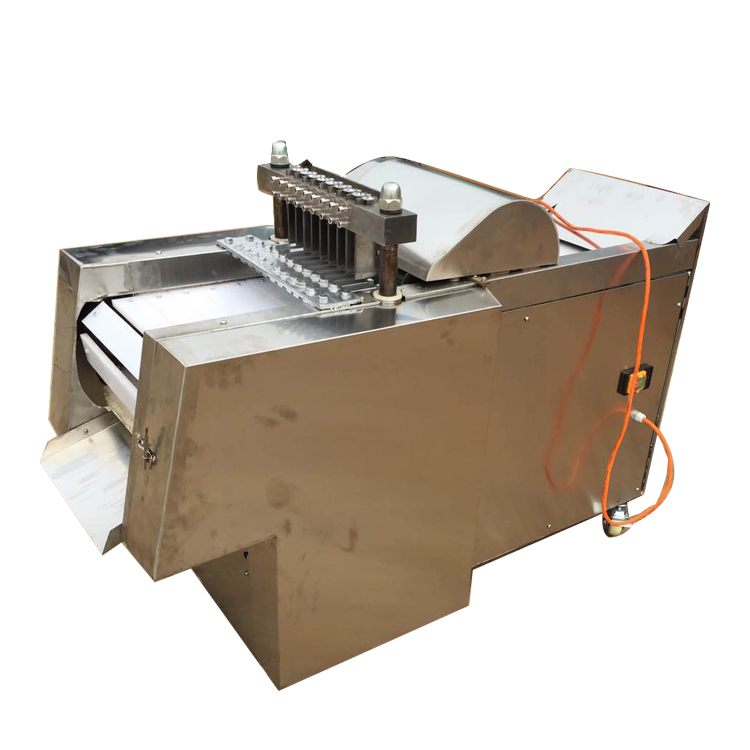
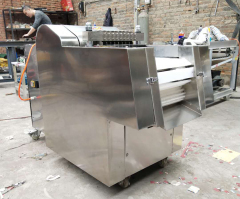
The design is plain on purpose. There is no hydraulic pack and no touchscreen to fail. The frame is plane-form stainless steel, the mechanism is mechanical rather than electronic, and the body is finished so the product path can be reached with a brush and a cloth at the end of a shift.
Among commercial meat processing equipment, that puts the machine in a narrow band: heavier and steadier than a counter-top cutter, simpler than a full line machine.
We supply this model both to meat processing equipment suppliers who stock it for butchery customers and to plants buying one set for their own cutting room. The machine is the same either way.
Three details decide whether the standard build suits you: the product you will cut, the temperature you hold it at, and the largest piece you intend to feed. Send us those and we will answer straight.
Cutting Performance & Build
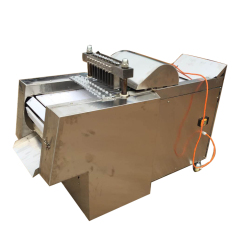
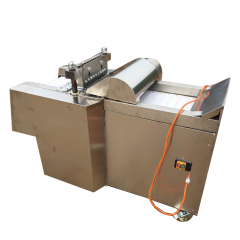
- Automatic feed, one operator — load a whole chicken or a drumstick at the feed and the machine takes it through; the operator loads and checks rather than guiding every cut. That is what makes the rated output reachable with one person at the machine. - Plane-form stainless steel frame with a finished exterior — the frame is flat and open instead of boxed in, so there is no shelf where fat and trimmings collect, and the faces are finished with a process that leaves a smooth surface for wiping down. - Blade head on sliding bearings — a copper adjustment block takes up play in the blade assembly, so the head runs smoothly and stays steady under load rather than drifting as the bearings settle. That detail is the difference between a clean cut and a ragged one after a few months of use. - Built for duty, not for show — the frame and blade head are sized for frozen product and bone-in pieces rather than for soft product with the occasional bone in it. That is what a commercial meat cutting machine is bought for, and it is the question worth asking meat processing equipment manufacturers when you compare builds. If a detail matters to you, put it in writing on the order so it is checked at the same time.
Frozen Product & Feed Handling
This is a portion cutter, not a dicer. Whole chickens, drumsticks, racks of ribs and frozen fish go in and come out cut through the blade head; the machine will not turn product into a fixed cube or a narrow strip. If your output is diced or strip-cut to a grid, a dicing machine is the right tool and this one is not.
Bones belong in the job description. Ribs and small animal bones sit alongside frozen meat, frozen chicken and frozen fish on the list of what this machine handles.
A frozen meat cutting machine is only as consistent as what you feed it. Piece size changes the load on the blade head, which is why a whole chicken and a large block are not the same job even at the same temperature. Tell us the largest piece you intend to feed and we will say whether the standard head is right for it.
Rated capacity assumes steady loading. On meat processing machinery of this size, what a shift actually produces depends on piece size, how evenly product is presented at the feed, and how quickly cut output is cleared and packed.
Consistency is the quiet benefit. Because the cut is set by the head rather than by eye, portions stay even across a shift and between operators — usually the reason a plant stops hand-cutting while it still has people available to cut.
Typical Applications
- Small and medium food processing plants — frozen product arrives in cartons and leaves as packed portions for distribution or further processing. The cutter sets the pace of the room instead of the room setting the pace of the cutter. - Slaughter sites and on-site breaking rooms — ribs and small bones come off the line and go straight through the cutter, so bone-in orders no longer wait for a separate hand-cutting shift. - Inline processing plants — the machine takes the stage that would otherwise slow the line: product arrives as frozen pieces, leaves as portions, and moves on to the next step. - Supermarket meat departments and butcher counters — whole chickens and drumsticks cut to the counter's portion size during trading hours, so a morning's prep is finished before the doors open. - Butcheries replacing a cleaver bench — commercial meat processing equipment only pays for itself when it removes a task rather than adding one; here the task that disappears is the hand-cutting of frozen and bone-in product.
Specifications
| Specification | Detail |
|---|
| Model | PH-600C |
| Capacity | 600kg/h |
| Voltage | 220v/50Hz |
| Power | 2.2kw |
| Dimensions | 1300 × 700 × 850 mm |
| Weight | 260kg |
| Body | Full stainless steel |
| Application | Frozen meat, frozen chicken, frozen fish, ribs and small animal bones |
| Blade mounting | Sliding bearings with copper adjustment block |
| Installation | Floor-standing, on casters |
| Feed | Whole chicken, drumstick and similar pieces |
Installation & Power
- Move it into place — a frozen meat cutting machine of this weight is a two-person job on casters rather than a rigging job; check it sits level and does not rock before the first batch.
- Run a batch on your own product — the real test of any commercial meat cutting machine is the product you sell at the temperature you hold it. Cut a full batch before the machine joins the daily schedule and check portion consistency as you go.
- Set the working rhythm — on meat processing machinery of this size the bottleneck moves downstream quickly, so decide who feeds, who packs and where cut product waits before the first full shift.
- Train the person who cleans it — show them the blade head and the bearing area on day one; habits set in the first week are the ones that last.
Cleaning & Maintenance
- Clean at the end of the shift, not the next morning — protein and fat set as they cool, and a film left overnight takes far longer to shift than one cleared while the machine is still warm.
- Work from the frame inwards — the plane-form stainless body has no folded seams to trap product, so cleaning is about reaching surfaces rather than dismantling anything.
- Keep water out of the bearing area — wipe and inspect the blade head assembly rather than hosing it down, and keep cleaning chemical off the bearings.
- Put the blade head on a daily check — the discipline that keeps any piece of meat processing machinery accurate applies here: check for play before the first batch, and take it up with the adjustment block when cut quality starts to wander.
- Agree the cleaning chemicals with us — if your site runs foaming or chlorinated sanitisers, confirm the method before the first week of production; what suits a stainless table is not automatically right for a machine with an exposed bearing assembly.
- Plan wear parts early — ask which blades and bearings are available for this model and where they come from; a replacement that does not trace back to the original meat processing equipment manufacturers can change how the head cuts.
Multi-Protein Shift Planning
- Fix the running order before the first batch — work from mild to strong: fish and seafood first, then poultry, then red meat. Fat and colour carry forward on a blade head, so red meat run before fish leaves a smear that shows on pale product. Writing the order on the shift sheet costs nothing and settles most of the argument about who cuts what first.
- No tooling change is needed, and that is the point — the same blade head takes frozen chicken, frozen fish and ribs, so the changeover is a cleaning and scheduling job rather than a set-up job. A frozen meat cutting machine run this way can handle three proteins in one shift without the head coming off.
- Give each protein its own kit at the machine — colour-coded tubs, boards and scoops kept beside the cutter instead of being fetched mid-run. A scoop that has been in raw chicken should never go back into the fish bin, and having the kit within arm's reach is what makes that easy to keep to.
- Book changeovers at a natural break — between pallets or at a shift handover, never mid-batch. A planned stop where one operator cleans while the next pallet is staged keeps the room moving; an unplanned one is where mixed batches and missed wipes come from.
- Clean from the head outwards — run the head empty, brush trimmings out of the product path, wipe the blade head and the discharge area, and check the bearing for play while your hands are already there. Two cloths, one for the head and one for the frame, both changed between proteins.
- Label everything that crosses the boundary — bins marked by protein and time, including the last few kilos cut before a changeover. Packing is where products actually get mixed, and one labelled bin is usually enough to prevent it.
- Keep the record simple and consistent — protein, time, who cleaned it. If your own quality team or your customers' auditors ask for a changeover log, confirm the format with us before the first shift so it fits the paperwork you already run; a commercial meat cutting machine is only as reliable as the routine built around it.
Ordering & Delivery
- Send five details — the product you will cut, the temperature you hold it at, the largest piece you will feed, your site voltage and the destination port. Those five answers remove most of the back-and-forth before a quote.
- We confirm the configuration and the price — commercial meat processing equipment of this size is quoted per set at US $1,200–2,500 FOB, with the final figure depending on configuration, quantity and destination. One set is a normal order, and monthly supply runs to around 100 sets.
- Agree the payment route — T/T, Western Union, MoneyGram and PayPal are all accepted; confirm the details on the invoice with your sales contact before paying.
- We check and pack against the order — voltage, plug standard and any spare blades you want included should be in writing at this stage, because they are checked before packing rather than after.
- Dispatch from Shanghai or Qingdao — tell us the destination port and we will confirm the current sailing schedule rather than a transit time we cannot hold to.
- Documents travel with the machine — a specification sheet, packing list and operator manual are included; tell us if your customs broker or quality team needs anything beyond that and we will confirm what can be supplied.
- Stock orders for resellers — meat processing equipment suppliers who stock for butcheries and supermarket groups can book this model as a standard line item; tell us the product mix your customers run so the configuration you hold covers it.
- Repeat orders — a second machine comes from the same meat processing equipment manufacturers and is built to the same specification, so operators are not relearning a different layout.
Technical Support & Model Matching
Tell us your output, product size and local voltage, and our technical team will match you to the right model from the manufacturers in our supply network. We have been sourcing food processing machinery since 2017 for buyers across Europe, North America and beyond. Before shipment we confirm configuration and any light OEM or ODM requirements; after delivery we stay with you through installation and commissioning guidance, operator training, fault diagnosis and spare-part support, with a 7×24 response line.
FAQ
Can it cut product straight out of the freezer?
The machine is built for frozen product; that is the design case, not a chilled machine with a frozen option bolted on. Temperature is the variable we cannot see from here — product from a blast freezer and product from a display freezer behave differently at the blade head. Tell us the temperature you store at and we will confirm whether the standard build covers it.
How is this different from a meat dicing machine?
A dicer turns product into a fixed cube or strip, with the size set by a cutting grid. This commercial meat cutting machine cuts portions through a blade head and is built around frozen product and bone-in pieces such as ribs. If your output is diced cubes to a set size, the dicer is the right machine; if it is portioned frozen product, this one is.
How many people does it take to run?
One person at the feed is enough to keep the machine working. A second person on packing is what keeps output steady through a full shift, because cut product clears the machine faster than one operator can bag it.
Can we set the portion thickness?
The cut is set by the blade head rather than by hand. Tell us the portion thickness you need and we will confirm what the standard build produces; if your specification is tight, send a photo or a drawing of the finished piece with your enquiry so the answer is specific.
Can we switch between chicken, fish and red meat in one shift?
Yes, provided the changeover is planned rather than improvised. Clear the product path and wipe the blade head between proteins, and schedule the biggest change for a natural break instead of the middle of a batch — it keeps the clean-down short and the records simple.