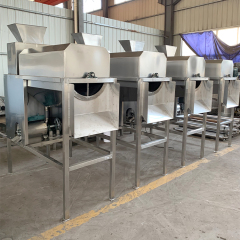
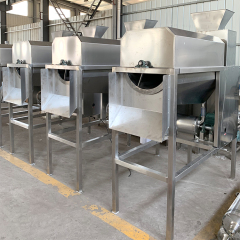
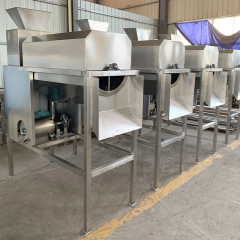
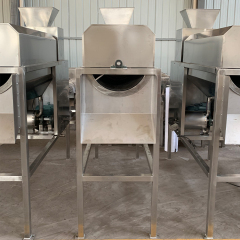
Product Overview
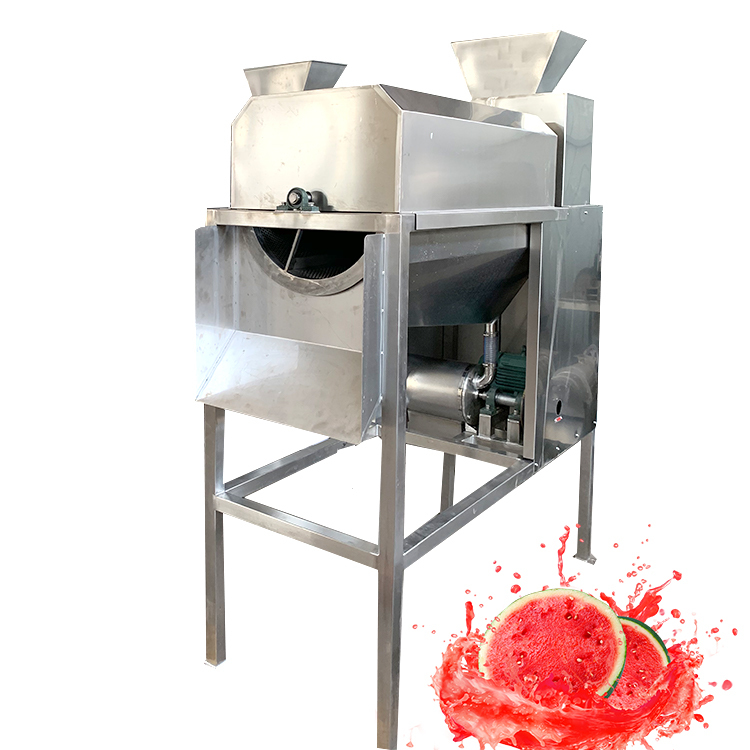
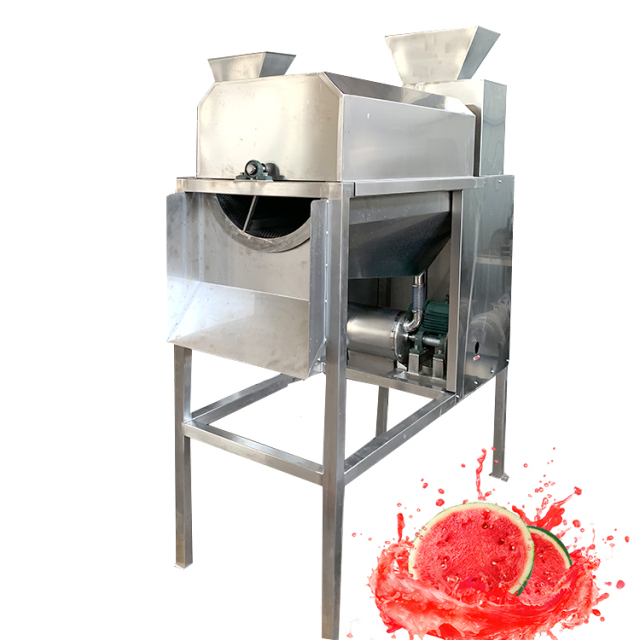
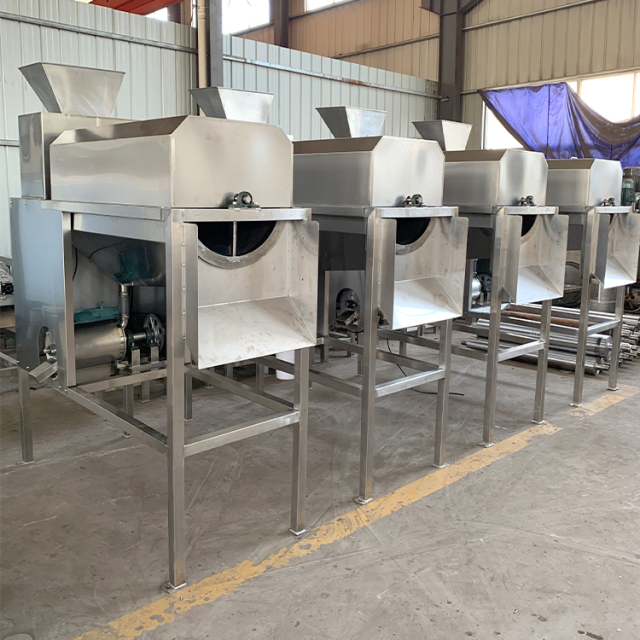
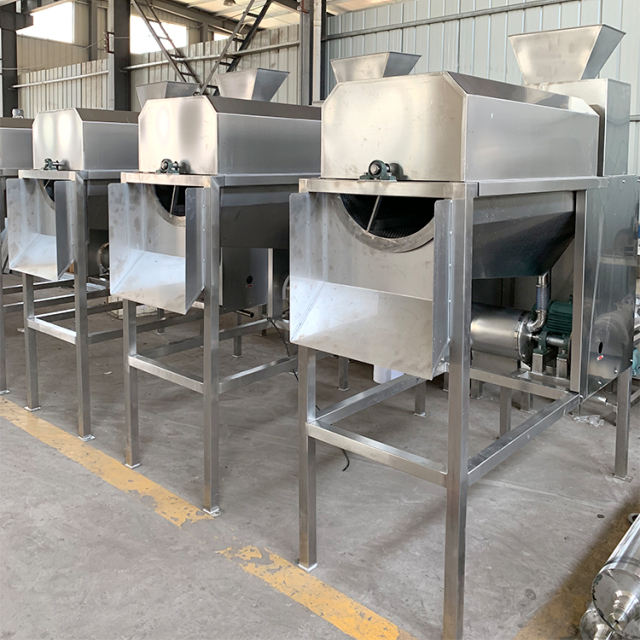
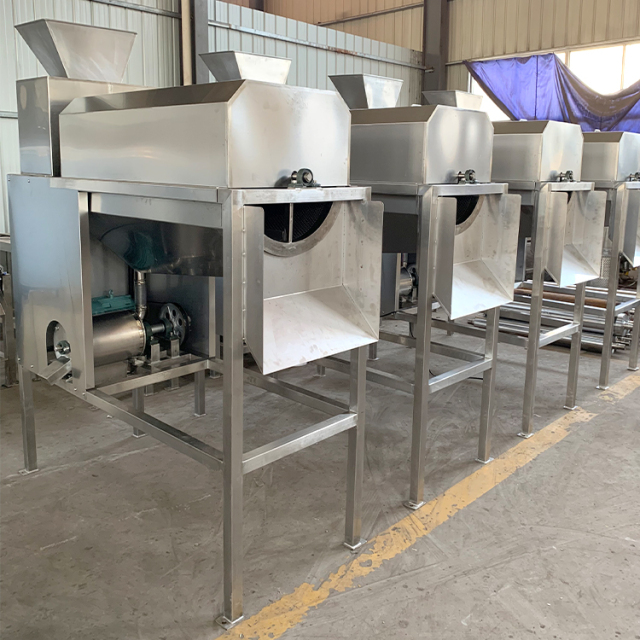
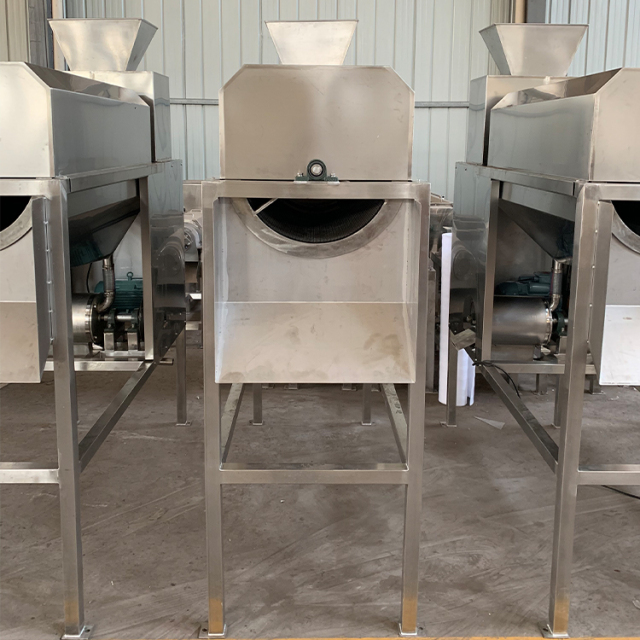
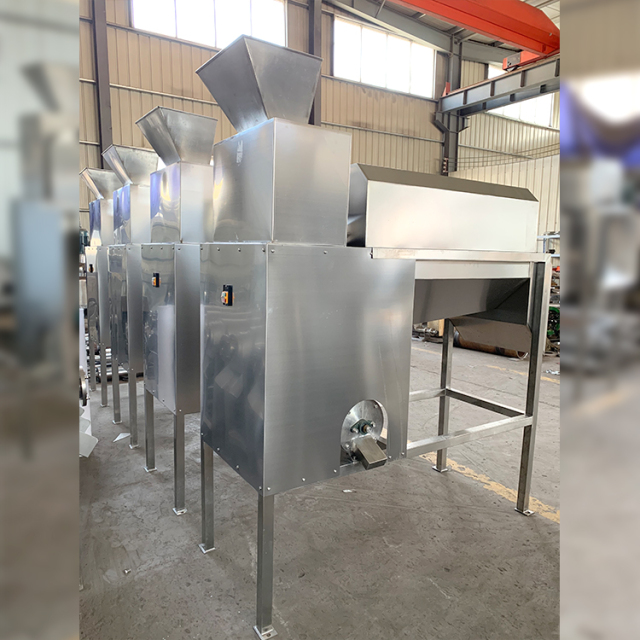
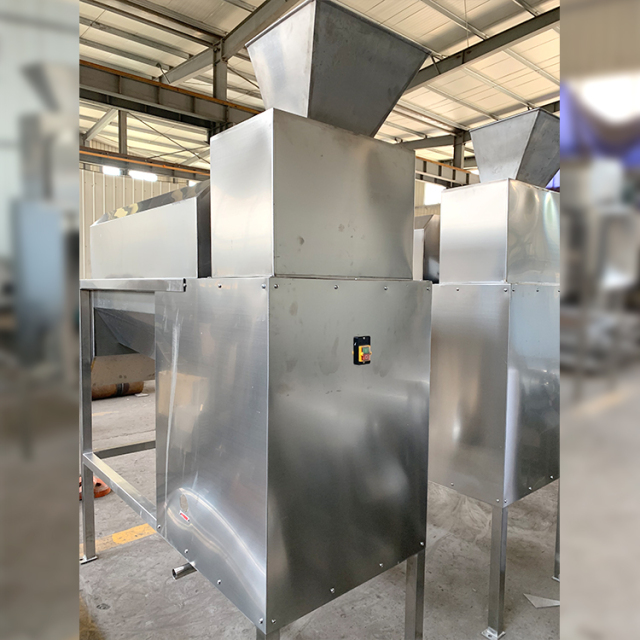
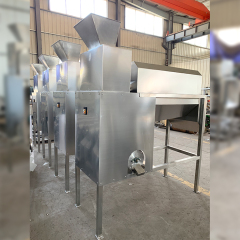
This stainless steel juice extractor for watermelon is built for production juicing rather than countertop work. Whole melons go in at the top, the machine breaks the flesh down, separates the rind and the pips, and sends usable juice out through a side discharge chute — peel, seeds and juice each leave by their own route. Because all three jobs happen in one continuous pass, there is no scooping table, no separate deseeding station and no second machine between the fruit and the juice.
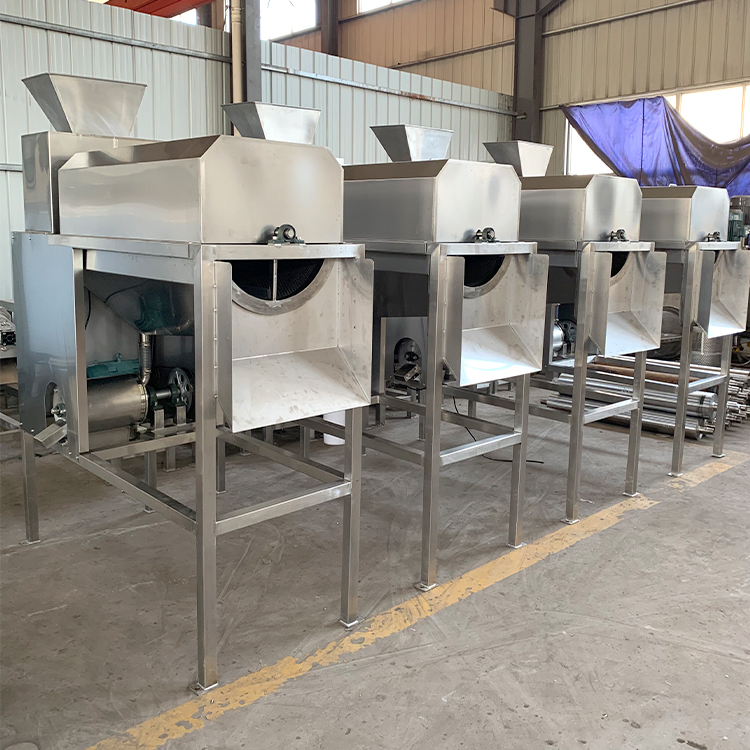
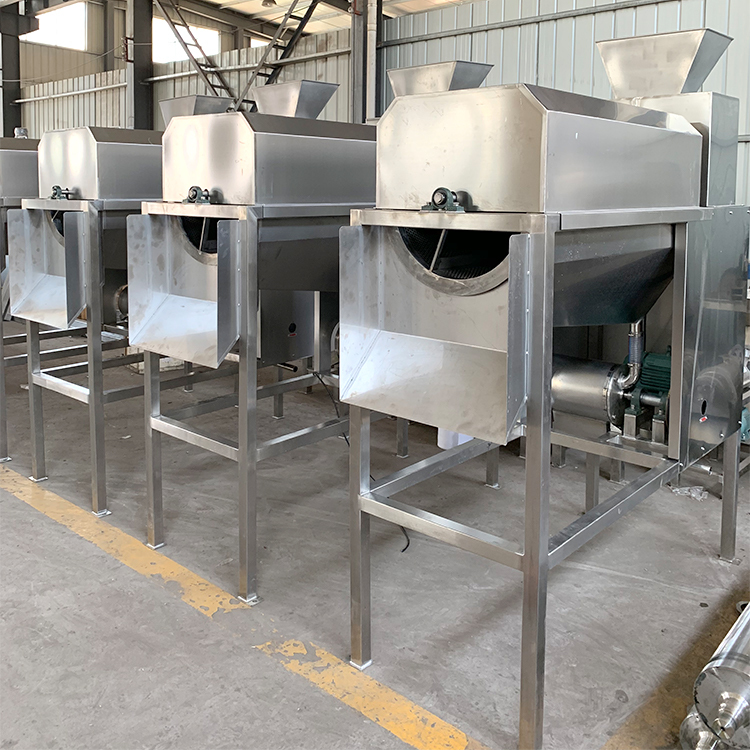
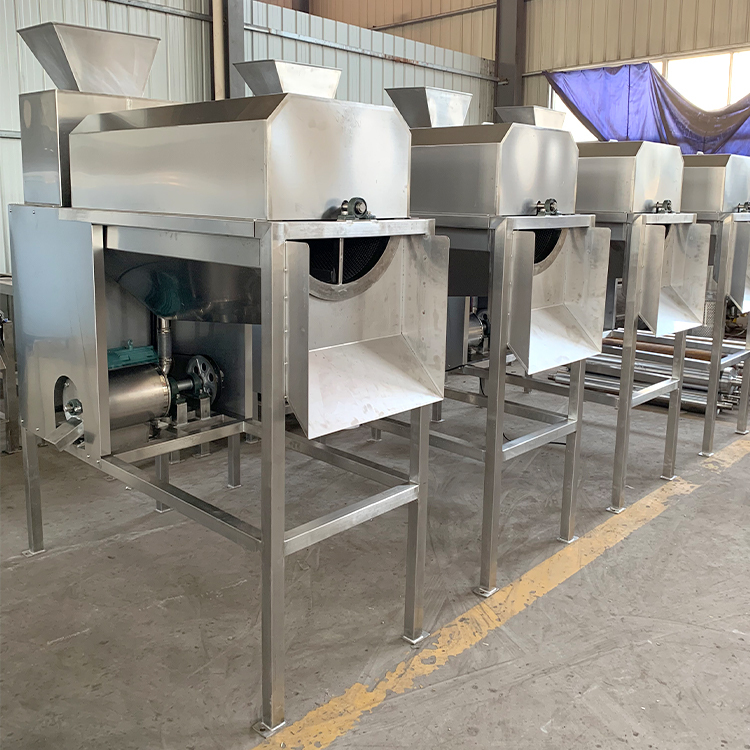
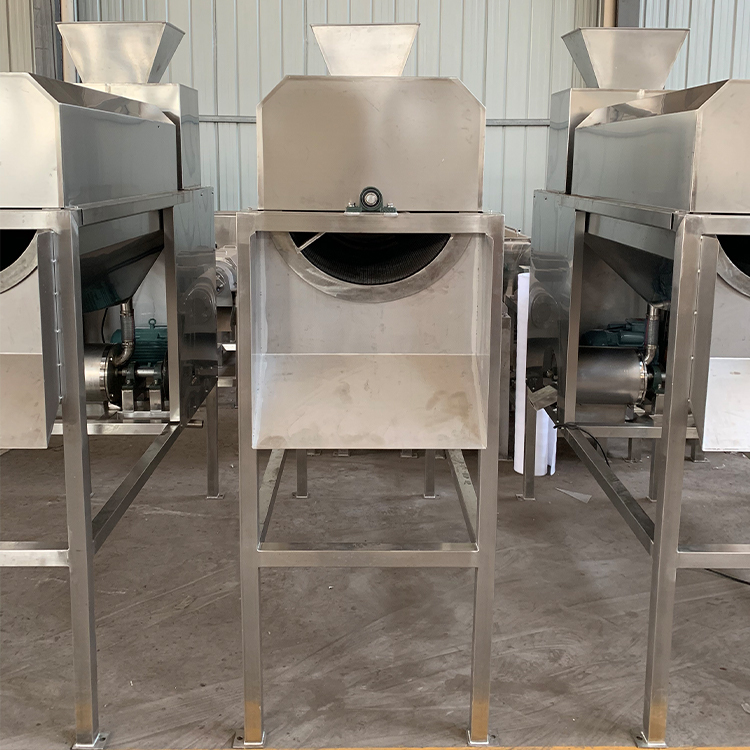
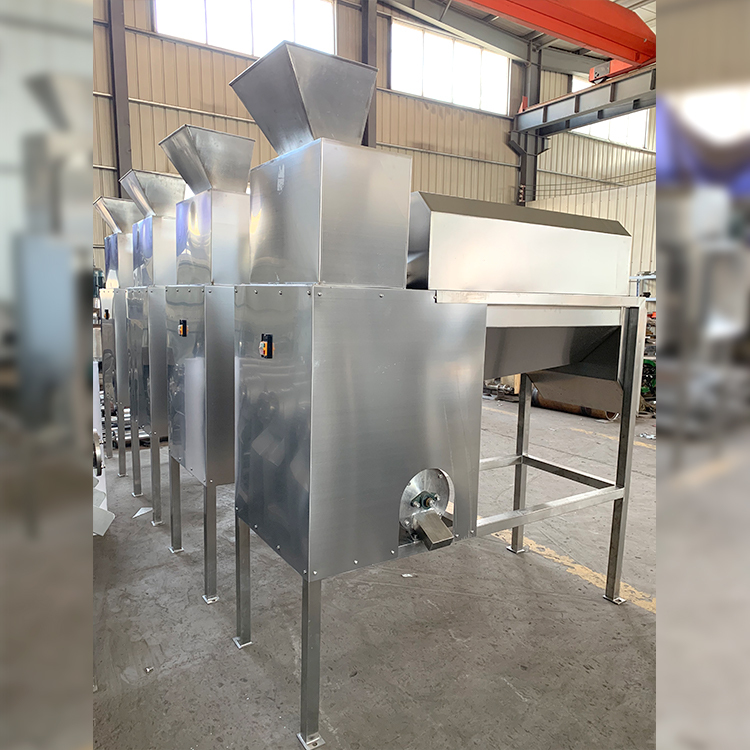
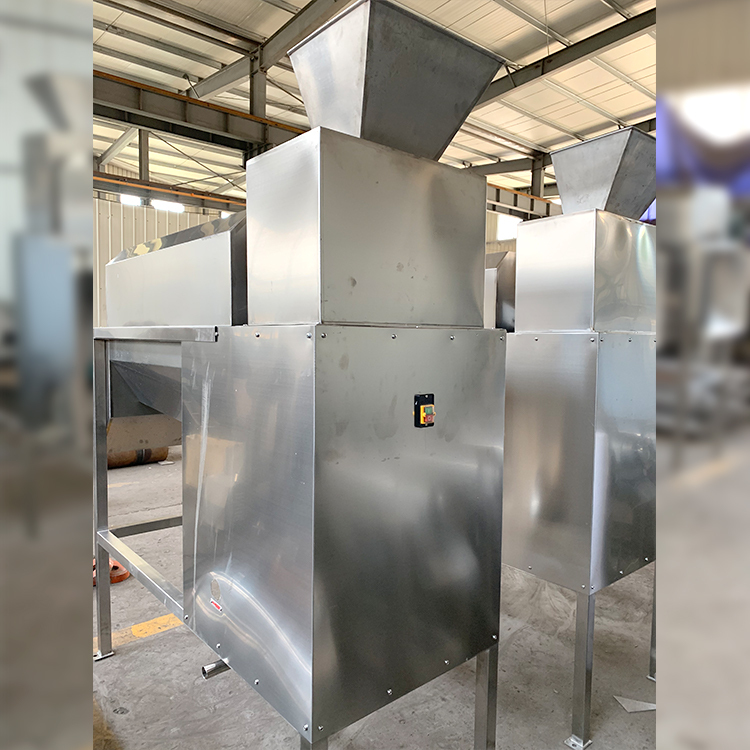
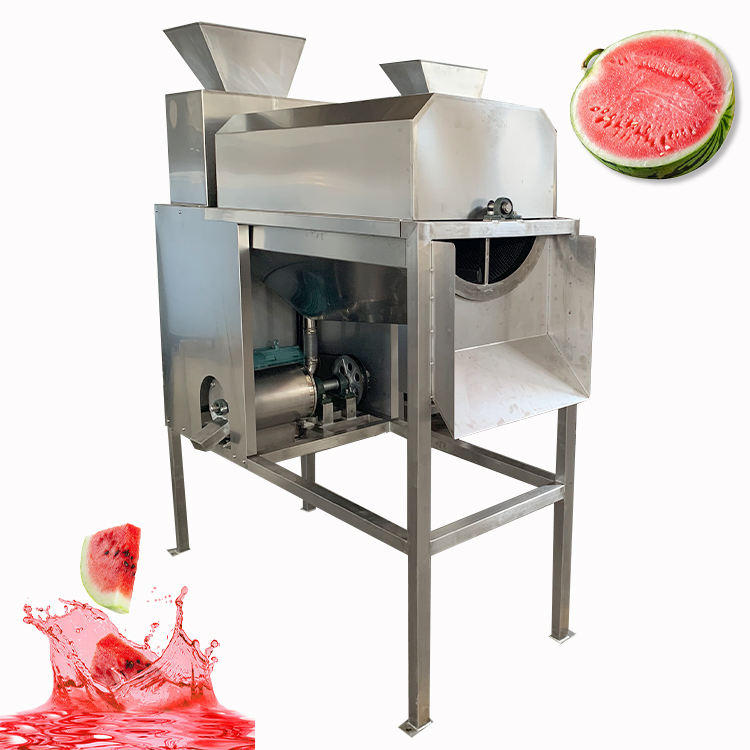
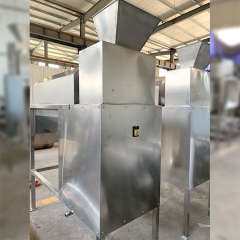
The unit is the PH-GZJ-1, a watermelon juicer machine built around a four-leg frame carrying a toothed crusher, a separation cylinder, a collection tank and a seed cylinder, driven by a motor and gearbox. Twin top hoppers let one operator keep feeding while the previous crate clears, and the side chute can be aimed into a tray, a bucket or a short pipe run.
As a juice extractor machine manufacturer, we size this unit for businesses that sell watermelon juice by the litre rather than by the glass — fresh-juice outlets, hotel and resort beverage kitchens, central kitchens, fruit processors and farms working through a harvest. If your volume is a few crates a week, this machine is oversized. If you buy melons by the pallet and sell juice every day of the season, it is the right scale.
- Whole fruit in, juice out — a crate of melons goes from the pallet to the outlet without a scooping table, a deseeding station or a second machine in between, which is normally two or three pairs of hands you no longer need on the juice line. - Three separate output streams — rind, seeds and juice each leave by their own route, so spent peel collects in one tub and seeds in another instead of being fished out of the juice afterwards. - Twin top hoppers — one hopper can be filled while the other is feeding, so a single operator can keep a steady rhythm rather than stopping between crates. - Side discharge chute — the outlet points sideways into whatever you place under it: a collection bucket, a transfer tray or a short pipe run to the next stage. - Simple drive train — one motor and gearbox run this juice extractor machine; there is no recipe screen or multi-step control panel, so a new operator is productive on the first shift and a fault is easy to trace. - Repeatable result — a commercial juice extractor machine earns its place by giving the tenth crate the same separation as the first, which is what keeps a fixed-menu juice consistent from opening to close.
Peeling, Seeding and Pulping Process
- Load whole watermelon into the top hopper — with this watermelon pulping machine there is no peeling, cutting or deseeding step before it.
- The teeth of the crushing knife on this watermelon juicer machine break the fruit apart as it drops into the crusher.
- The crushed material passes into the separation cylinder, where juice, pulp and rind tumble together and part company, with the rind held back and the juice and pulp moving inward.
- Rind leaves through the dregs hopper at the end of the separation cylinder.
- Juice and pulp fall into the liquid collection tank and flow on into the seed cylinder.
- Inside the seed cylinder a silicone scraper presses the juice through the small holes in the cylinder wall; the seeds are too large to follow and stay behind.
- Juice leaves through the outlet toward your next stage and the seeds discharge through the seed outlet — three separated streams from a single feed.
Stainless Steel Build and Hygiene
The body, hoppers, cylinders and collection tank make this a stainless steel juice extractor, and the parts that meet the fruit are food-grade: in our food processing builds the food-contact components are 304 stainless steel, and you can ask for the material certificate if your own inspection file needs the grade in writing. The finish is brushed rather than painted, so a hard knock does not open a rust line the way a coated panel can, and nothing flakes into the product.
On this watermelon pulping machine, panels are bolted and held with clamp handles, so the working chambers can be opened for inspection and rinsing instead of being sealed inside a welded shell. On arrival, run your eye along the welds and the corners where pulp can lodge, and check that the dregs hopper and the collection tank sit squarely with no gap at the joint.
Stainless is not maintenance-free. Acidic juice left sitting on a brushed surface will dull it overnight, and chlorine-based cleaners attack the passive layer, so rinse with clean water at the end of the shift and use the cleaners your supplier recommends. For an industrial watermelon juicer that is washed down daily, food-grade contact surfaces and openable panels matter more than the thickness of the sheet.
Capacity, Voltage and Floor Space
- Where you land inside that band depends on melon size, how evenly the hopper is loaded and how quickly the dregs hopper is cleared, so treat it as a working range rather than a fixed output. - Sizing to your busiest day — count the litres you sell on your peak day, then count the hours you can realistically give the machine. If the peak needs more than the top of the band allows in those hours, plan a second shift or a larger unit rather than assuming the machine will stretch. Have your electrician measure the supply at the wall and send us the reading before the order is released. Measure the door frame, the ramp or lift, the ceiling and any ductwork on the way to its position before it ships. - Working clearances and drainage — leave room at the feed side for crates, room at the chute for whatever catches the juice, and enough space to swing the panels open for cleaning. The floor should be level, load-bearing and have drainage nearby, because the area will be wet. - Plan for an operator, not a conveyor — this stainless steel juice extractor is fed by hand; the top of its capacity band is reached only when one person keeps the hopper filled steadily, so staff for that rhythm. - Outlet height sets the plan — juice leaves the collection tank through the side outlet and runs down into whatever sits under it, so the tray, tank or filler inlet has to sit below that outlet with its rim clear. Send us the height of your receiving vessel before the build sheet is signed and we will confirm the outlet position rather than leave it to be discovered on arrival. - Short runs need no pump — a tray, a bucket or a short length of food-grade hose to a nearby tank works on gravity alone. For a long pipe run, a tank set below floor level or a filling head several metres away, a transfer pump is usually needed; ask us to confirm what the machine includes and what your side of the line has to supply. - A buffer tank steadies a filling line — the machine delivers a steady stream while it is being fed, but that stream pauses each time the hopper is reloaded. Where a filler draws continuously, place a small buffer tank between the outlet and the filler so the line keeps running through every reload instead of waiting on the operator. - Do not throttle the discharge — a valve or a clamped hose on the outlet side backs juice up into the collection tank and makes the separation work harder than it should. Size the downstream vessel to take the flow and control the line at the filler, not at the machine. - Keep the joint cleanable — whatever connects the outlet to your tank becomes part of the food path. Use a clamp fitting and a hose or pipe you can take apart and wash, not a taped joint that traps pulp at the seam. - Watermelon only, as built — the crushing knife, separation cylinder and seed cylinder are set for a large, high-moisture fruit with a firm rind and hard seeds. This industrial watermelon juicer is not a general-purpose fruit juice extractor machine: pineapple brings a tough skin and a fibrous core, citrus needs a different separation principle, and apples or pears need a mill and press rather than a cylinder. - Ask before you plan a second product — if you also want to run another fruit, tell us which one, at what volume and in what condition it arrives. As your watermelon juice extractor machine supplier, we will say plainly whether the drum, screens and knife can be changed for it, or whether a second machine is the honest answer. - How to confirm the fit — send a photo of the receiving vessel with its height and distance from the outlet, a simple sketch of the line if one exists, and the melon variety and average fruit weight you buy. Those details let us confirm the discharge arrangement and the produce it will handle well before production starts.
Typical Production Settings
Fresh-juice bars use it to turn a daily melon delivery into bottles and cups without a preparation team, and usually place it where customers can see the fruit going in. Hotel and resort beverage kitchens run it before breakfast and again before dinner, when watermelon juice is on the menu and the alternative is a blender and three people. Central kitchens and chain commissaries use this watermelon pulping machine to supply juice to several outlets from one production point, which is where consistent separation between batches matters more than raw speed.
Fruit and vegetable processors add it as a dedicated watermelon stage beside existing washing and packing lines. Farms and cooperatives use this industrial watermelon juicer during harvest, when fruit is abundant and input costs are low and the bottleneck is how fast it can be turned into something that keeps or ships. Distributors and importers buy it as a stock item for juice businesses in their own market.
Short seasons are normal in this trade, and they shape what buyers ask for: a machine that starts cleanly after months in storage, a build that matches the local supply, and paperwork that clears without a second round of emails. Those three requests are what we take back to the watermelon juicer machine manufacturer when an order is confirmed.
Specifications
| Product name | Watermelon Juicer Machine Watermelon Juice Extractor Machine |
| Material | stainless steel |
| Model | PH-GZJ-1 |
| Capacity | 0.5-1.0T/H |
| Suitable for | watermelon |
| Voltage | 220v/380v |
| Power | 2.2kw |
| Dimension | 1900*850*2260mm |
| Functions | Peeling, seeding and pulping (juicing) in one pass |
| Main parts | Crushing knife, separation cylinder, liquid collection tank, seed cylinder, frame, transmission parts |
| Discharge | Dregs hopper for peel, seed outlet, juice outlet |
Cleaning and Maintenance
- Flush at the end of the shift — rinse the crushing chamber, separation cylinder, collection tank and seed cylinder with clean water before pulp dries; dried pulp is what turns a ten-minute job into an hour.
- Empty the dregs hopper early — if rind piles up, material backs into the separation cylinder and separation quality drops, so clear it during the run rather than at the end.
- Check the screen holes against the light — blocked holes push pulp into the seed stream, and once pulp is in the seed outlet you lose juice recovery without noticing.
- Inspect the silicone scraper — wipe the edge each shift and replace it when it stops wiping cleanly; a tired edge shows up as wet, pulpy seeds rather than as a visible break.
- Keep the motor and gearbox dry — do not hose them directly, and check the mounting bolts at the start of a season, when vibration from storage and transport has had time to work them loose.
- Follow the manual for the transmission — lubrication intervals and belt or chain checks belong to the maintenance schedule, and a new noise is worth investigating before it becomes a stopped line.
- Lay the machine up properly between seasons — clean and dry it, leave the panels open for air, and run it on water before the first real batch; keeping this juice extractor machine dry and aired is most of what an off-season needs, as it is for any fruit juice extractor machine left standing for months.
Ordering and Delivery
- Tell us what a normal day looks like — litres of juice at peak, the melon size you buy, the hours you can give the machine and how many people will feed it.
- Confirm the electrical supply at the wall: voltage, phase and the breaker that will feed the machine. We send a build sheet back with the configuration that matches.
- Approve the build sheet and, where one applies, the dimension drawing. Production starts from that approved sheet rather than from a catalogue photo, and the juice extractor machine manufacturer builds to it.
- Settle the commercial details with your sales contact: price basis, packing and the dispatch port that suits your forwarder. Shanghai and Qingdao are the ports we normally use, and the exact terms, payment arrangement and lead time are confirmed on the order.
- Arrange inspection and documents before dispatch, including the packing list and any certificate your customs broker asks for.
- Agree the spare parts and the manual language that will travel with the machine. As your watermelon juice extractor machine supplier we keep the build sheet, packing list and spare-part list together in one file so nothing has to be reconstructed later.
- The specification sheet behind the table above is available as a download for your project file, and it is the document most buyers forward first — to an engineer checking the layout, to an electrician sizing the supply, or to a forwarder quoting the move. If the download does not cover what you need, ask your sales contact and we will send the version that does: a dimension drawing for floor planning, the electrical data for your panel, and the packing details your forwarder will want before booking space. Manuals come from the watermelon juicer machine manufacturer, so tell us which language your operators read and we will confirm what can travel with the shipment rather than promise a translation we have not checked. The same applies to the spares list: we can send the recommended list for this model, and you can decide what to hold based on how many hours you plan to run. Keep the approved build sheet with the manual — when a part has to be replaced two seasons later, that sheet is what makes the replacement straightforward.
Technical Support & Model Matching
Tell us your output, product size and local voltage, and our technical team will match you to the right model from the manufacturers in our supply network. We have been sourcing food processing machinery since 2017 for buyers across Europe, North America and beyond. Before shipment we confirm configuration and any light OEM or ODM requirements; after delivery we stay with you through installation and commissioning guidance, operator training, fault diagnosis and spare-part support, with a 7×24 response line.
FAQ
Can this machine press other fruit as well as watermelon?
It is built and listed for watermelon, and that is where it performs most effectively: the crushing knife, separation cylinder and seed cylinder are set up for a large, high-moisture fruit with a firm rind and hard seeds. Other fruit behaves differently — pineapple has a tough skin and a fibrous core, and citrus needs a different separation principle entirely. A commercial juice extractor machine set up for watermelon should not be assumed to run a second fruit without changes. Tell us what else you want to process and we will say plainly whether this unit can be adapted or whether a different model suits better.
Do the melons need peeling or deseeding before they go in?
No. Whole fruit goes into the hopper, and the machine splits it into rind, seeds and juice on its own, so the labour is loading and clearing rather than preparing. What it does need is a steady feed: one person keeping the hopper filled gives a far better result than tipping in a crate and walking away. A juice extractor machine of this size rewards that rhythm more than it rewards raw speed.
Can the juice outlet feed our existing tank or filling line?
Juice leaves through a side discharge outlet, so it can be aimed into a tray, a bucket or a short pipe run to a tank, depending on the height and position of what you are feeding. Send us the height of your receiving vessel and the distance to it, and we will confirm how the outlet should be set up before the unit is built. As the watermelon juice extractor machine supplier we would rather settle that detail on paper than on the day it lands.
Can you customize the machine for our site or our brand?
Light customization is available — voltage, labelling and small configuration changes such as the outlet arrangement are agreed before production. Requirements are settled with the watermelon juicer machine manufacturer at the build-sheet stage, and you approve that sheet before anything is cut. Send the requirement with your enquiry and we will confirm what can be changed and what stays standard.
How long can it run in one stretch?
It is designed for continuous feeding through a shift rather than batch-by-batch work, so the practical limit is usually how fast melons reach it and how often the dregs hopper is emptied. Like any fruit juice extractor machine working a harvest peak, it should be checked between shifts — scraper edge, screen holes, mounting bolts — rather than run for weeks untouched. Tell us the shift length you have in mind and we will confirm the duty that suits your pattern.
What spare parts should we keep on site?
The first consumable to hold is the silicone scraper on the seed cylinder, because it wears as it wipes and a tired edge shows up as wetter, pulpier seeds rather than as a visible failure. Beyond that, ask for the recommended spares list with your order: screens, seals and drive-side parts are the usual candidates, and the right kit depends on how many hours you run each season. We can confirm the juice extractor machine manufacturer's standard list for this model so you order once, not piece by piece.