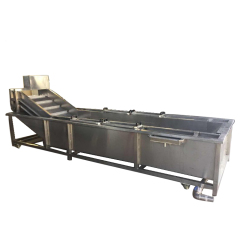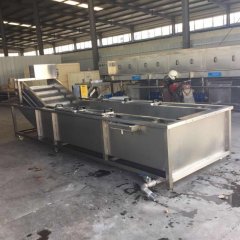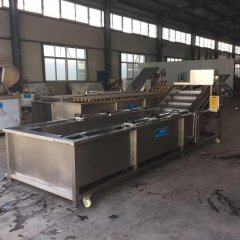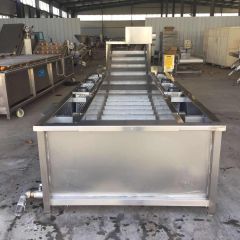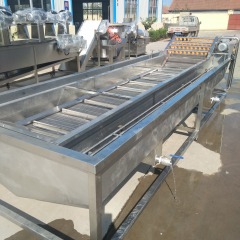
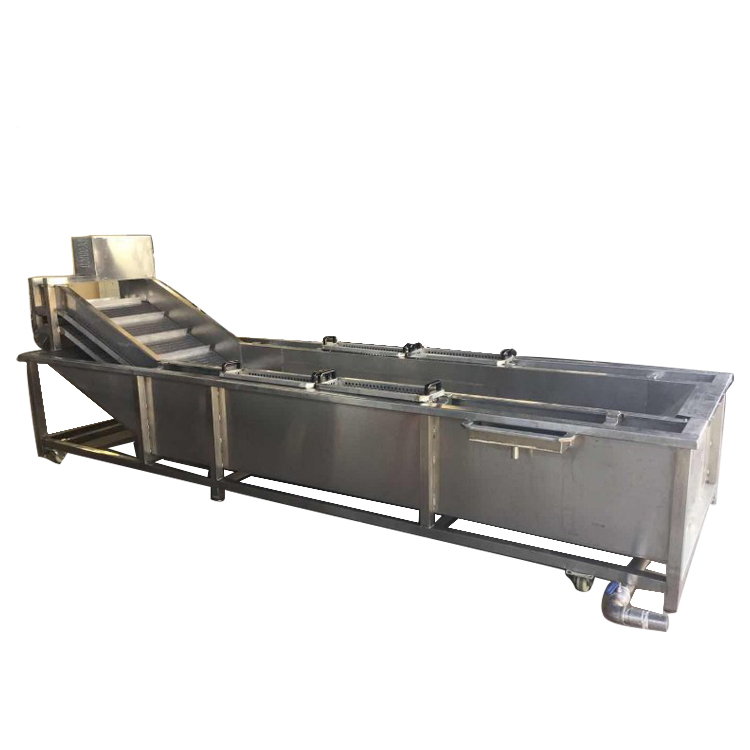
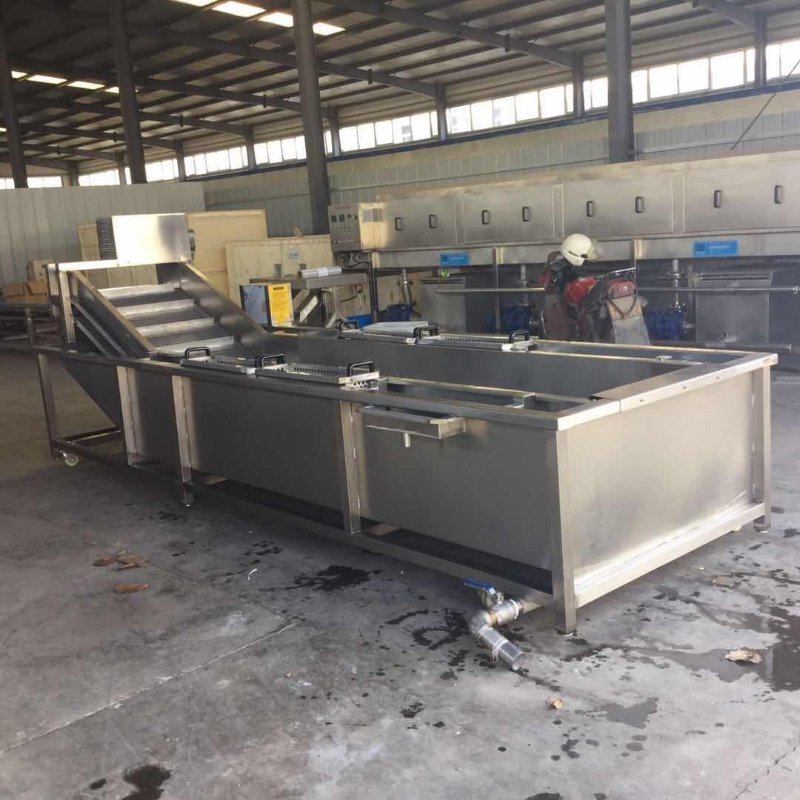
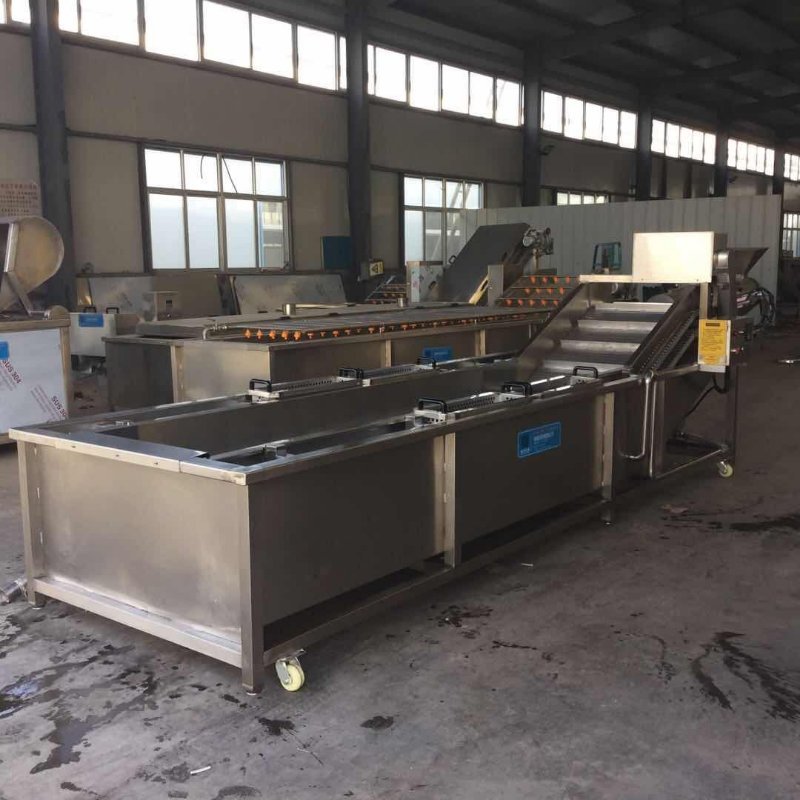
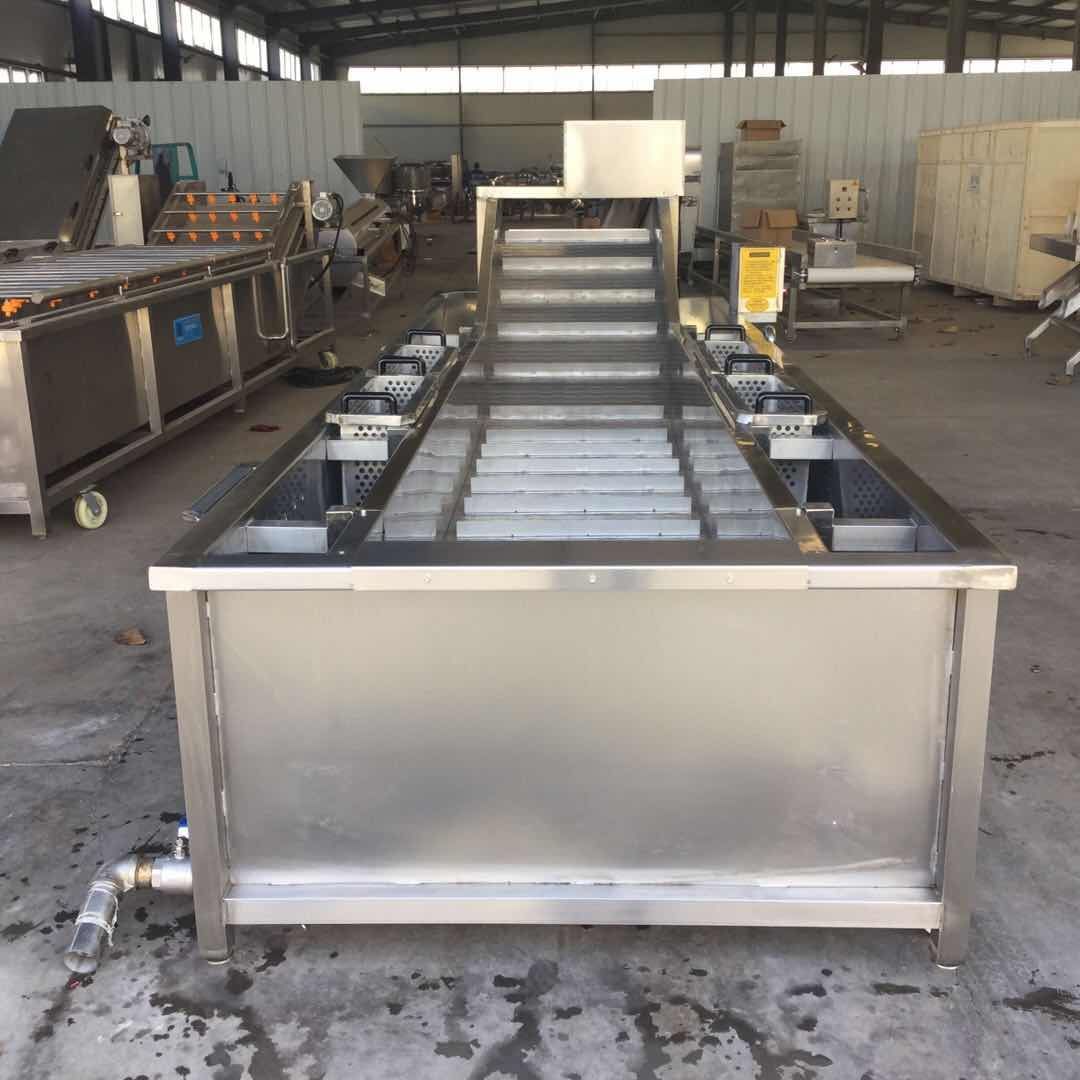
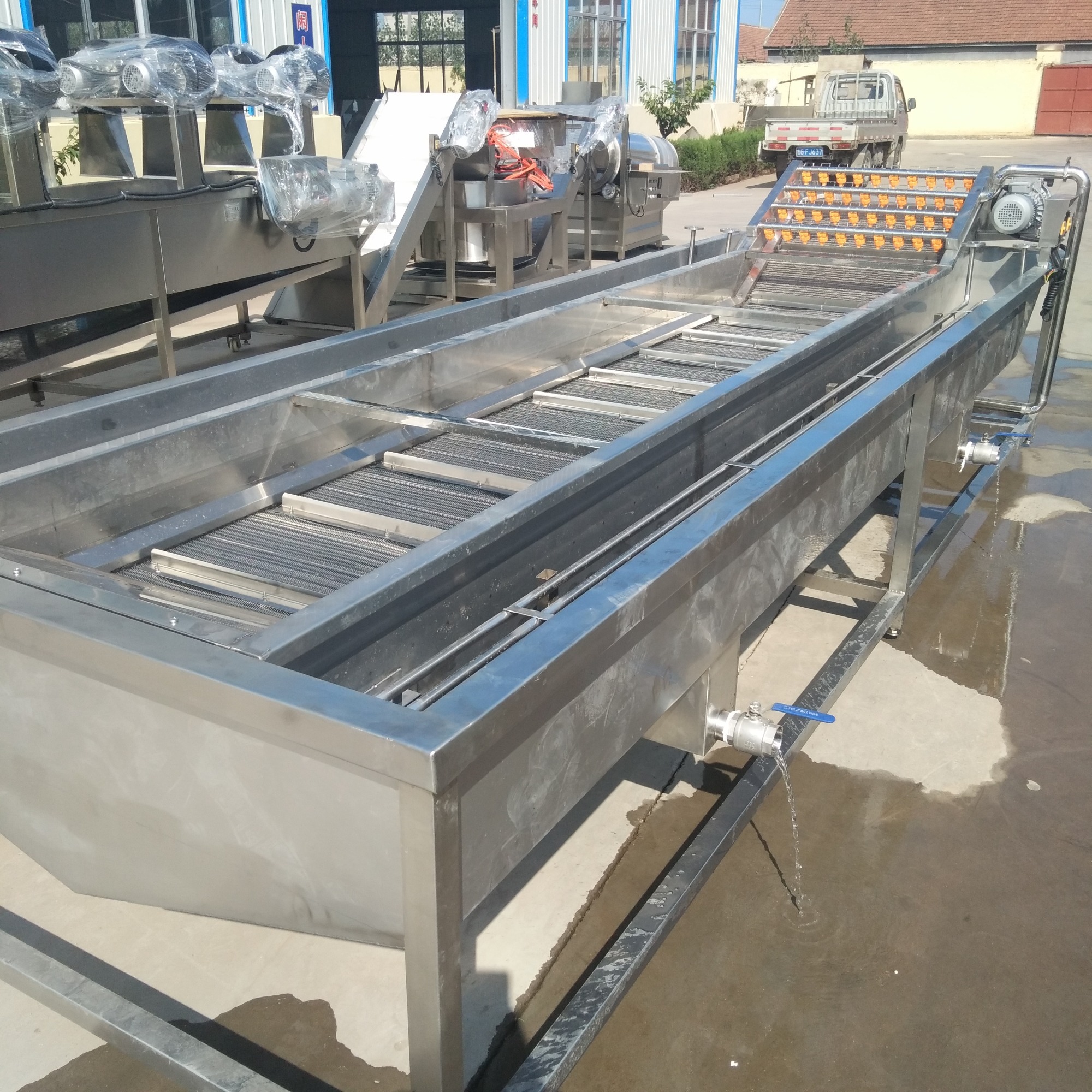
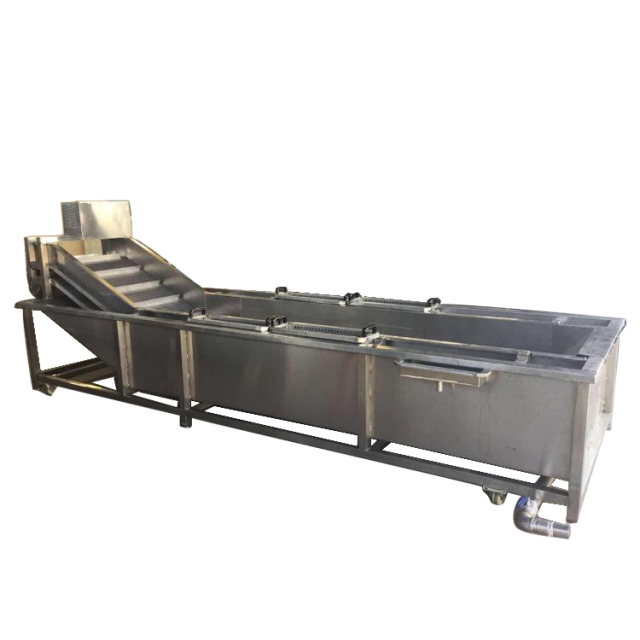
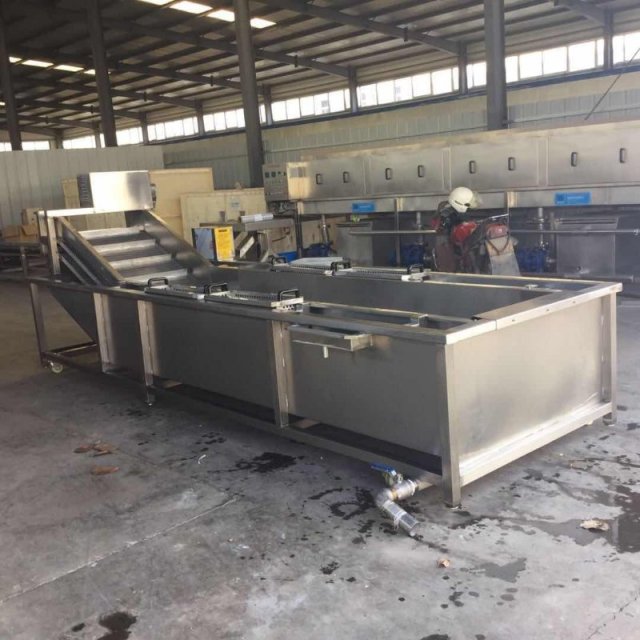
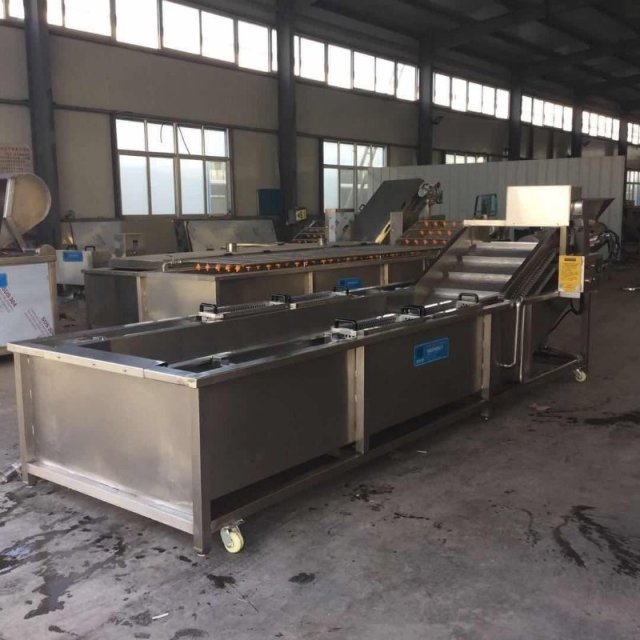
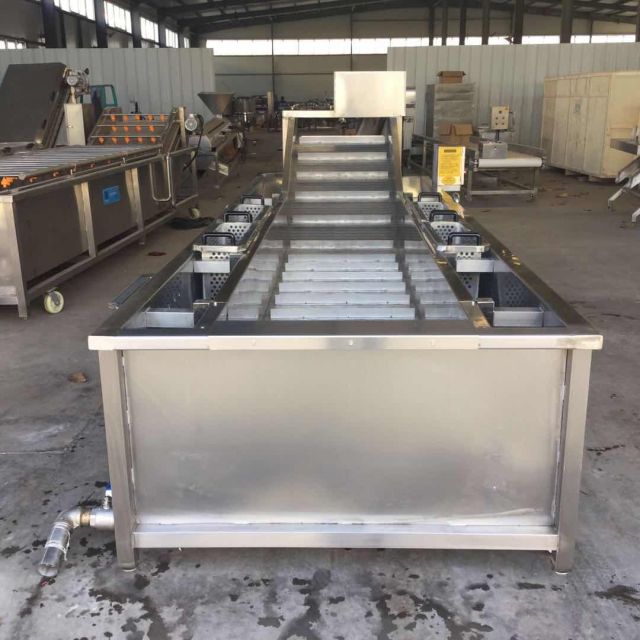
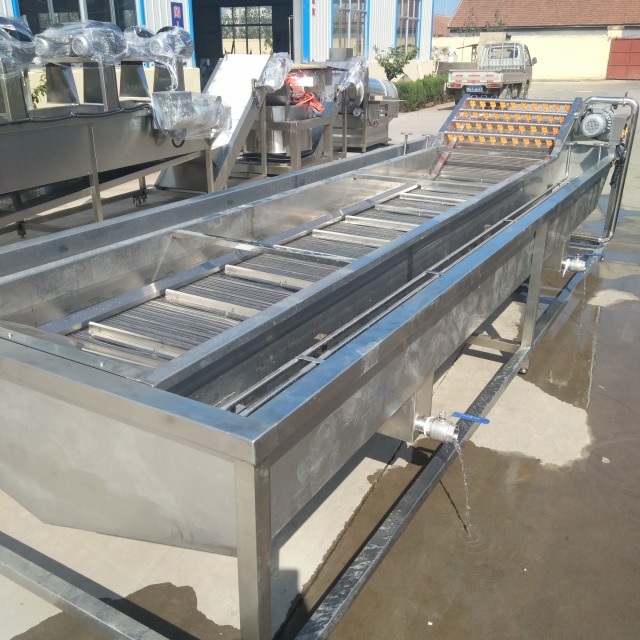
Frozen product starts losing quality the moment it meets dry freezer air. The ice glazing machine Model PH-3000 answers that with one continuous step: product leaves the freezer, crosses a stainless steel belt through 0 °C glazing water, and comes out wrapped in a thin, even shell of ice that stays with it through storage, stacking and shipping. The unit is built for the place this step actually happens — in the middle of a running line. Frame and product-contact surfaces are SUS304 stainless steel, the grade these plants already work in around salt water, wash-downs and constant humidity. It suits processors who freeze fish, shrimp, sea cucumber, meat cuts, meatballs, seafood balls or similar formed products, whether they glaze by hand today, use a dip tank, or skip the step entirely. Against hand dipping, the automatic cycle takes the guesswork out of coat thickness, frees the labour tied up in the step, and — because the water is purified during glazing — leaves a clear coat rather than a cloudy one. Nothing here is tied to one product shape: whole fish, fillets, blocks, balls and mixed loads all travel the same belt. If you are comparing options for a commercial meat processing equipment line, settle three things early: the throughput you actually need, how the unit will be fed and taken away, and the floor space you can give it. We can work through those against your line layout before anything is ordered. - A coating set by the machine, not by the operator. Because the belt sets the pace and the bath holds its temperature, coat thickness comes from the equipment rather than from individual judgement, which is what makes one shift look like the next. - Glazing water held at 0 °C through the shift. The stainless steel conveyor keeps the water steady from the first piece to the last, so late-afternoon product gets the same treatment as the start of the run. - Fewer refill stops. A tank that holds its temperature and level lets the line run longer between top-ups, which means fewer interruptions between freezing and boxing. - Throughput that matches a working line. The unit is rated to run alongside the freezers and packing tables of a mid-sized plant, so the glazing step stops being the place where product waits. - One self-contained unit. Belt, bath and frame arrive together, so the step is installed as a machine rather than assembled from a dip tank and a separate transport track. - Supported from selection to start-up. As meat processing equipment suppliers we match the unit to your product, throughput and conveyor heights before the order is fixed, and stay reachable through commissioning. - Adding a glazing step to a line that has none. Plants that freeze and pack straight away are leaving weight and quality on the table; the glazer drops in between the freezer and the packing table without rebuilding either. - Replacing hand dipping or a dip tank. Operators stop holding product under water by eye, and the coat stops changing with who is on shift or how busy the line is. - Preparing export container loads. Product that will cross an ocean and change hands several times needs a layer that survives the crossing and the handling, not just the packing hall. - Co-packing and private-label runs. When several customers' products share a plant, a repeatable machine-set coat keeps each label's specification intact. - New product launches and trial batches. Short runs are where a conveyor glazer beats a dip tank: changing product is a matter of loading, not of resetting a bath. - Mixed-product weeks. On meat processing machinery lines that run fish one day and formed products the next, the step stays the same and only the loading changes.
A glaze is judged before it is ever touched. Ice formed from purified water sets clear, so the product stays visible inside its shell instead of sitting behind a milky, frosted veil — the difference between a fish that looks like it came off the boat this week and one that looks like it has been in storage.
Colour is the second gain. A clear coat lets the natural tone of the flesh, shell or skin read through, which is exactly what buyers use to judge freshness at a glance: the red of shrimp, the silver of a whole fish, the dark shine of sea cucumber. A cloudy glaze mutes all of it.
Consistency matters as much as clarity. Because the belt carries every piece through the same 0 °C water, the coat on the last carton of a shift looks like the coat on the first. Mixed pallets stop showing a patchwork of thin and heavy glazing, and the product a distributor opens in three months looks like the sample you sent.
None of this is vanity in frozen food. Clear-window packs, counter displays, wholesale samples and distributor listings all depend on product that looks cold, bright and intact. A coat that frosts over or cracks away inside the carton undoes the freezing work behind it, and no meat processing equipment further up the line can put that right afterwards.
One practical note: clarity starts with the water. Clean glazing water gives a clear coat, and a tank left standing gives a dull one, so the daily water routine belongs to the finish rather than to housekeeping.
SUS304 is the grade most meat processing equipment manufacturers standardise on for wash-down areas, and this unit uses it for the frame, the tank and the product path. That matters in a fish or meat room, where salt, humidity and daily cleaning attack ordinary steel and where a rust bloom on a contact surface becomes a hygiene finding rather than a cosmetic one.
The conveyor is stainless steel as well, and it is not simply a carrying surface. It is what holds the glazing water at 0 °C, so belt and bath work as one system rather than as a dip tank with a transport track running over it.
The other half of the build story is the ice itself. Glazing is not a decorative dusting — the layer is what takes the knocks. A coat applied at a stable 0 °C sets tougher than a thin wash from a hand dip, so it resists cracking when cartons are stacked, when pallets are moved and when product shifts in a container on a long route. Fewer cracked coats mean fewer chipped pieces, fewer rejected cartons and less product arriving at the other end looking tired.
Cleanability follows the same logic. Flat stainless panels, an open tank and a belt you can see and reach are quicker to rinse between shifts than enclosed, painted or mild-steel construction, and equipment that is quick to clean is equipment that actually gets cleaned.
Every unit is quality-tested before shipment. Before ordering, confirm the product-contact surfaces against your own hygiene requirements if your buyer or auditor asks for it in writing.
Glazing water is a food-contact medium, so it gets treated like one. Drain and refill the tank on the schedule your hygiene plan sets — daily in most fish and meat plants — using the drain valve rather than tipping the unit. Between changes, skim out product fragments that would cloud the water and settle on the belt. The stainless surfaces are the easy part. A rinse and a wipe with the same food-plant detergent your team already uses on tables and trays keeps the frame, tank and belt in condition; what matters is that water is not left standing in the tank between shifts. Rinse the belt at the end of the run, check tracking and tension weekly, and keep the control box closed and dry. A short daily walk-round catches most trouble before it becomes a stoppage: belt condition, water level, valve closed, nothing fouling the drive. Keep the manual with the machine and record what was changed, so a fault can be traced rather than guessed at. Spare parts and after-sales support come directly from the manufacturer, so a worn belt or valve does not turn into a lost week. Ask which wear items make sense to hold for your throughput — as meat processing equipment suppliers we would rather see two small parts on your shelf than a container waiting on one.
Seafood is where glazing earns its place fastest. Fish lose moisture through the exposed surface as soon as they enter a freezer, and that loss shows up later as white dry patches, shrunken fillets and a texture that no longer matches what the buyer paid for. A glaze applied straight after freezing puts a barrier over the surface before that damage starts. The three products most plants run through this unit behave differently on the belt. Whole fish and large fillets present a big, smooth surface that takes an even coat quickly, so loading is mostly about spacing pieces so they do not overlap. Shrimp and small shellfish have far more surface area per kilo, which is why they glaze fast and why a steady water temperature matters — a warm bath gives a heavy, uneven pickup on small pieces. Sea cucumber is the most delicate of the three: high-value, easily damaged and usually sold on appearance, so a clear, thin, tough coat protects it without hiding what it is. Uniformity is the quiet benefit. Dehydration loss falls with it, which is money that used to leave the plant as water vapour. Presentation carries the rest. Glazed seafood reaches the counter or the display looking like it did when it was packed, and in a trade where the buyer judges with their eyes first, that is the version of your product they remember when the next order is placed.
| Item | Specification |
|---|---|
| Product Name | Ice Glazing Machine |
| Model | PH-3000 |
| Material | SUS304 Stainless Steel |
| Conveyor Belt | Stainless steel, maintains 0°C water temperature |
| Capacity | 400 kg / hour |
| Power | 0.75 kW |
| Voltage | 380V |
| Weight | 300 kg |
| Machine Size | 3000 × 1100 × 1300 mm |
| Applications | Fish, meat, seafood, food balls and other food products |
Tell us your output, product size and local voltage, and our technical team will match you to the right model from the manufacturers in our supply network. We have been sourcing food processing machinery since 2017 for buyers across Europe, North America and beyond. Before shipment we confirm configuration and any light OEM or ODM requirements; after delivery we stay with you through installation and commissioning guidance, operator training, fault diagnosis and spare-part support, with a 7×24 response line.