Product Overview
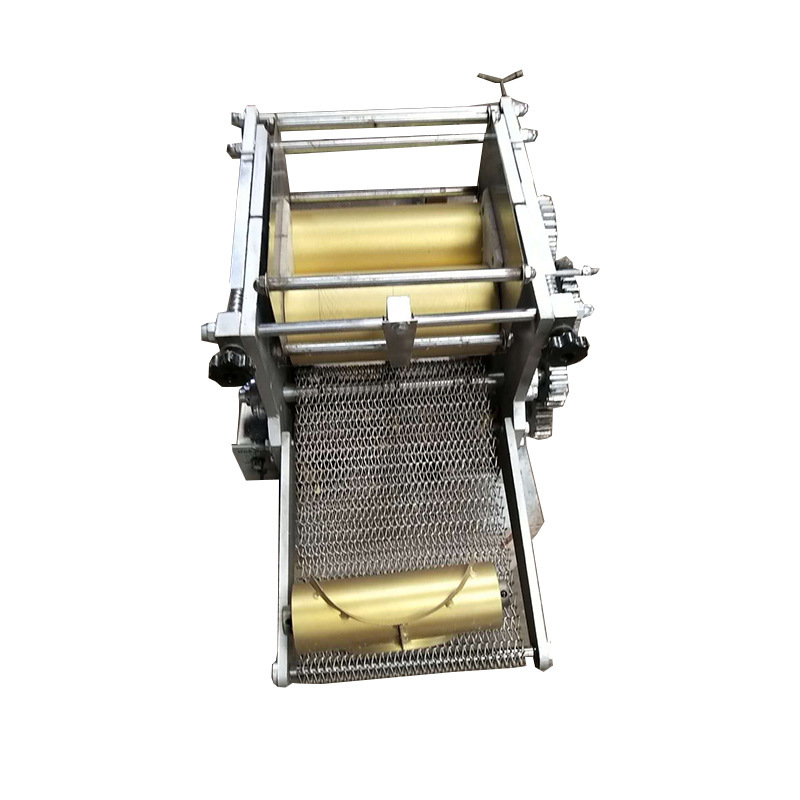
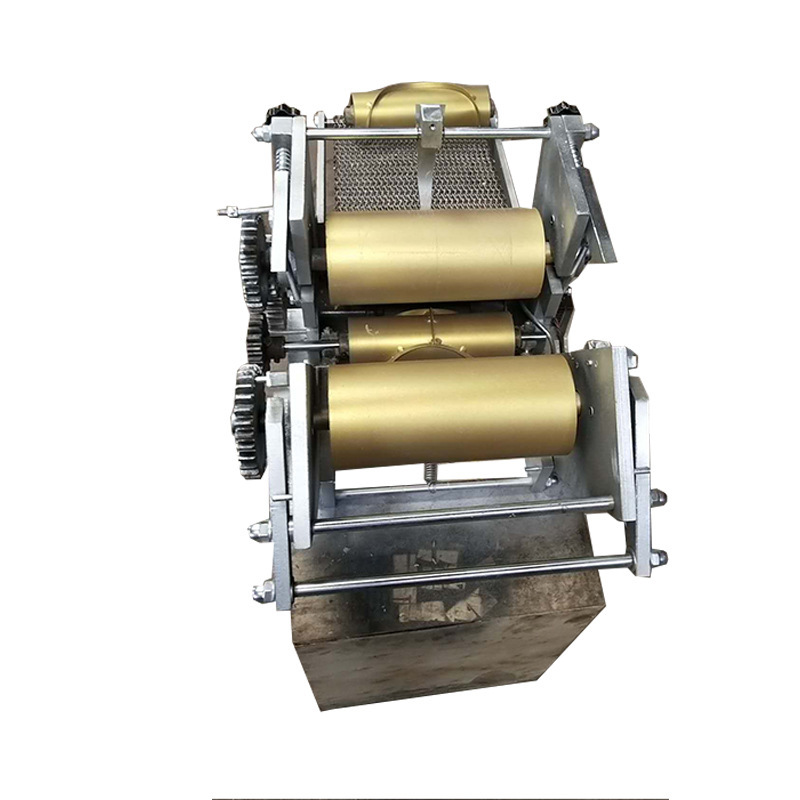
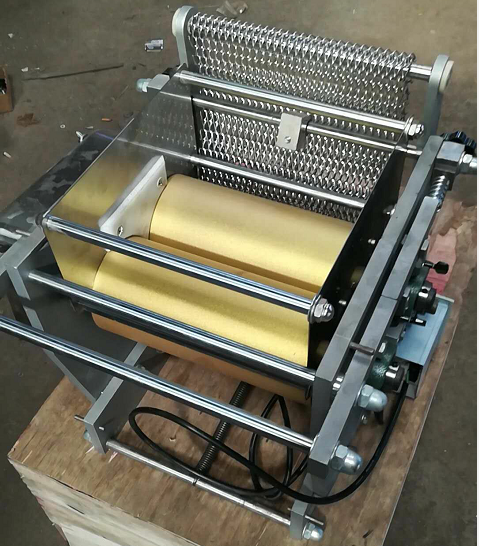
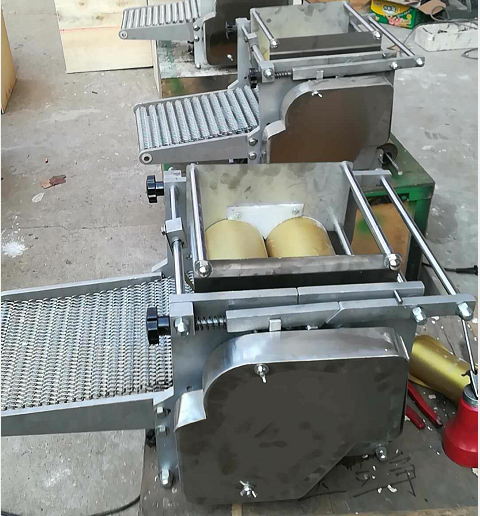
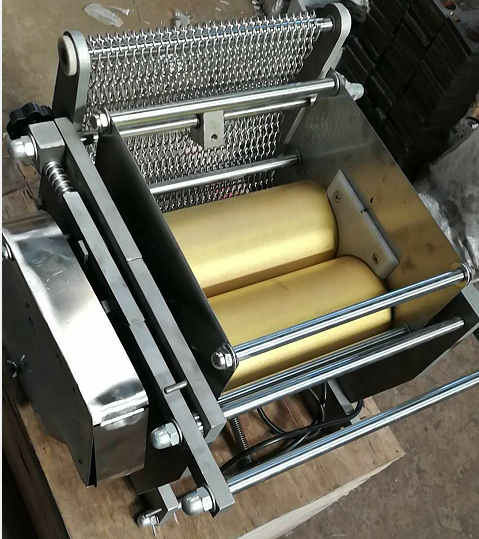
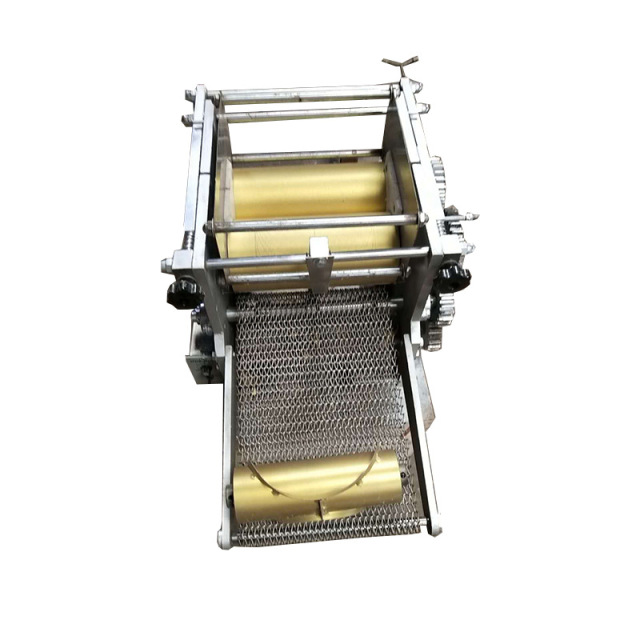
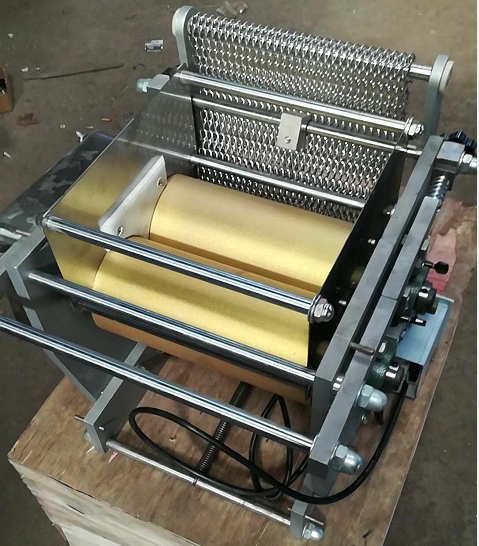
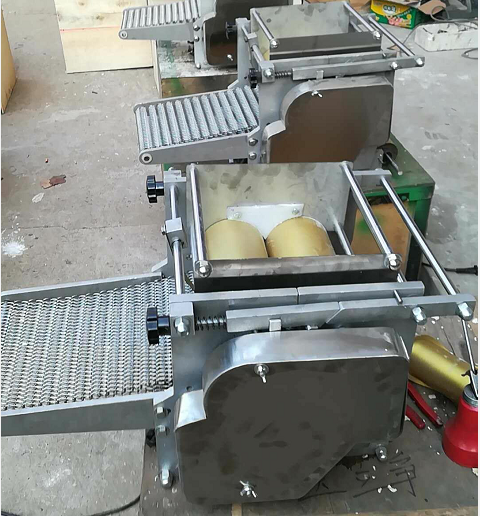
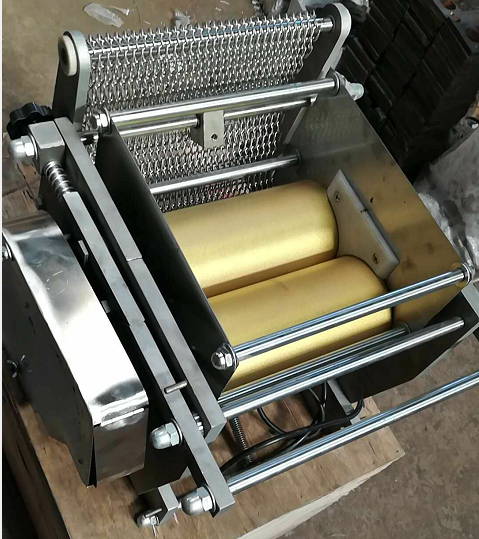
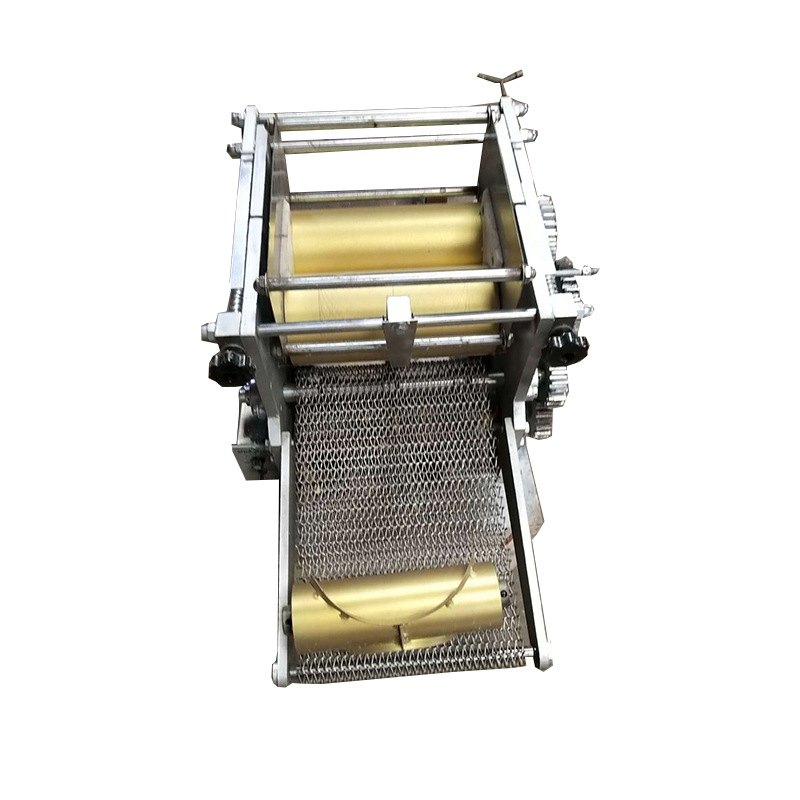
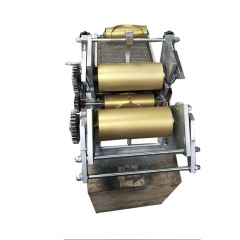
The corn tortilla making machine is a compact electric former for thin, round flatbreads. Soft, evenly mixed dough passes between two mould rollers; they press it into a sheet of even thickness and a smooth surface, and the formed rounds come off in a continuous stream, ready for the griddle, the warmer or the packing table. What it takes over is the pressing. Instead of a team dusting, pressing and re-pressing dough by hand, one person feeds the machine and lifts the finished rounds away. It is an electric tortilla machine in the plainest sense of the phrase: no gas line, no wood, no ash and no smoke at the forming point, so the unit can stand in an ordinary prep room or kitchen without extraction above it. Set that against a hand tortilla press machine and the difference is pace. This is equipment built to keep a service or a small production run supplied all day, not to turn out a dozen pieces at a time, and the rounds keep the same shape and thickness from the first hour of the shift to the last. Nothing about running it is hidden: the operator watches the dough go in and the rounds come out, and resets the roller when the product changes. Mixing, resting and dividing the dough stay in your kitchen. The machine's job begins when the dough is ready to press. - Two mould rollers, one continuous pass. Dough is drawn between two profiled rollers that shape it into a round as it moves through; there is no separate pressing, cutting or trimming stage to keep in line with the rest. - The same thickness, piece after piece. The roller setting holds the gap for the whole run, so each round leaves with the thickness of the one before it. That consistency, more than speed, is why kitchens stop hand pressing. - Smooth face, clean round edge. The rollers press the dough rather than tear it, so the surface stays smooth and the edge stays round — what shows on the plate, and what lets the rounds stack evenly in a pack. - Made for thin products. Wraps, rotis and thin pancakes come off without the dough folding back on itself or being overworked on the way through. - Automatic where it counts. An automatic tortilla maker of this size earns its keep by holding shape and thickness without the operator judging every piece; the person at the machine feeds dough and takes rounds off. - No flame and no smoke. The rollers run from a small electric motor on a single-phase supply — no gas, no wood, no ash — so the forming area stays clean and the operator is not working in heat. - One frame, not a line. Everything sits together instead of spreading across a row of stations, so the machine drops into a prep area and can be moved when the layout changes.
Build & Materials
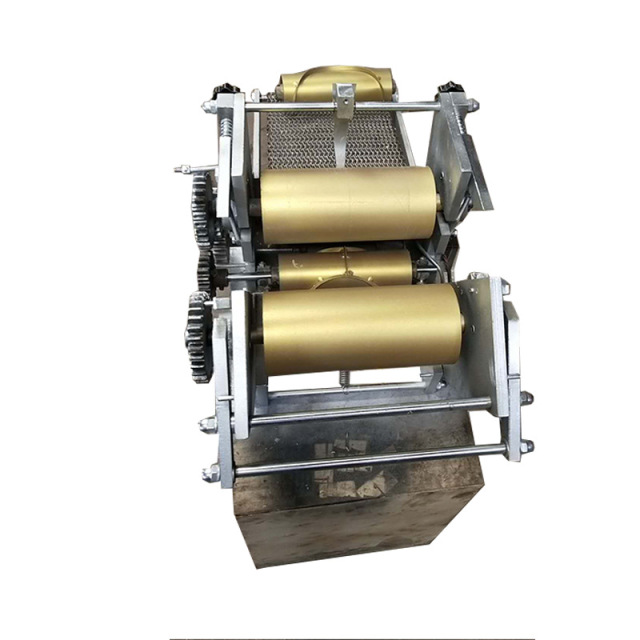
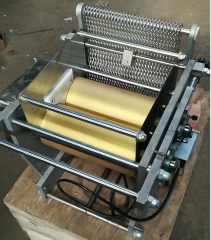
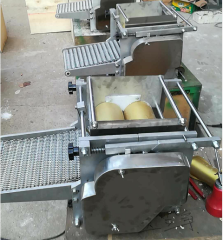
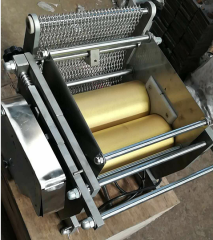
- Rollers held in threaded adjusters. Spring loading takes up small changes in dough pressure, so the setting does not walk during a run, and a fitter can reset the roller position when the product or the thickness changes. - Gear drive at the side of the frame. An electric tortilla machine this size does not need a complicated transmission; the exposed gear set can be inspected and cleared without stripping panels off. - Wire mesh take-off conveyor. Formed rounds travel away from the rollers on a mesh belt that lets air reach both faces, so the pieces do not sweat and stick together before they reach the griddle or the tray. - Stainless steel where the dough touches. Contact surfaces wipe down cleanly, and the frame has no deep pockets where dried dough can sit out of sight until the next inspection. - Steady at running speed. The frame has enough mass to stay put while the rollers turn, which is more than a bench-top tortilla press machine can manage — the setting you dialled in at the start of the shift is still the setting at the end of it.
Siting & Start-Up
- Check the floor and the clearance. The machine needs a level, stable surface, with working room on the feed side and the take-off side so the operator is not reaching over the rollers.
- Confirm the supply matches the build.
- Put it next to the next step. Site the machine where formed rounds go straight to the griddle, the warmer or the packing table — carrying a full tray across a busy kitchen is where rounds get crushed.
- Set it level. Check that the frame does not rock; a machine that shifts under load will change thickness from one round to the next.
- Run a small test batch. Feed a piece of dough at the thickness you intend to sell, look at the round, and reset the roller before you commit a full mix.
- Agree the routine. Decide who feeds, who takes off and where the rounds land, so the machine is never waiting on a person and the person is never waiting on the machine.
- Record the settings. Write down the roller position and the dough recipe that worked, so the next changeover from a chapati making machine to a corn run is a repeat rather than a re-test.
Where It Fits
- Taquerias and taco counters. A corn tortilla making machine in the same room the tortillas are served in, with the forming done at the pass and no separate dough station taking up the counter.
- Roti and chapati kitchens. The same unit serves as a roti making machine where flatbreads go out all day; the thin settings suit a soft roti that folds without cracking.
- Central kitchens and multi-outlet groups. One machine in the production kitchen keeps several sites supplied with rounds of the same size and thickness, so a customer gets the same tortilla at every branch.
- Small tortilla and flatbread plants. Run as a chapati making machine or as a corn line, it covers the step between mixing and packing without a full industrial former, and a second unit can be added as volume grows.
- Catering and event kitchens. Small enough to set up in a temporary kitchen and simple enough that agency staff can run it after a short briefing.
- Food machinery distributors. A self-contained commercial tortilla maker that suits buyers who want a flatbread machine on the shelf without committing to a full production line.
Specifications
| Parameter | Value |
|---|
| Product name | Tortilla Making Machine |
| Model | No.G001 |
| Product width | 2–7 inches |
| Product thickness | 1–8 mm |
| Capacity | 40 piece/min |
| Voltage | 220V or customized |
| Motor power | 300w |
| Net weight | 50kg |
| Packing weight | 62kg |
| Machine dimensions | 700 × 500 × 400 mm |
| Packing size | 500*500*500mm |
Product Size & Output
In practice, the small end of the width range gives you the two-bite rounds that go out as snacks or with a starter, and the top of the range covers the wraps and rotis that fill a plate. Thin settings suit a wrap that has to stay flexible; the thicker end holds its shape under a wet filling. Because one commercial tortilla maker covers the whole band, a menu that runs from snack size to full wrap does not need a second machine on the floor. Rated output assumes a steady feed and a dough that is behaving. A first-time operator will run below it while they learn to keep the dough moving at an even pace, and a stiff or crumbly mix will slow the line down whoever is feeding it. Read the figure this way: the machine will always be faster than the person feeding it, so your dough preparation sets the real pace. Even so, one unit takes over forming work that would otherwise keep a team of hand pressers busy. Short runs are not a problem. You can form one product, stop, and come back to a different one later in the day — a roti or chapati making machine for the morning shift, wraps after that — which is what a mixed menu actually needs. Running cost is set by a small electric motor rather than a burner, so the electricity behind a thousand rounds is a minor line in the day's costs. Tell us the rounds per day and the size mix you sell, and we will tell you whether one unit carries the volume or whether a second machine is the better answer.
Cleaning & Daily Care
Flatbread machines attract dried dough, and dried dough is what turns an easy clean into a scrape. Brush the rollers, the adjusters and the conveyor down while the machine is still warm and the dough has not set, using a stiff brush and a dry cloth. A tortilla press machine rewards that single habit more than any other piece of care.
Wipe the stainless surfaces with a damp cloth and a cleaner suited to stainless steel, then dry them. Keep running water away from the motor and from the gear drive at the side of the frame — a damp cloth is enough on those parts, and a hose never is.
Look at the roller surface at the end of every shift. A scored or dented roller prints the same mark on every round, so a small nick is worth catching while it is still small. Check that the threaded adjusters are holding their setting, and listen for a new noise from the drive; both are inexpensive to put right when they are noticed early.
Once a week, go over the frame and the conveyor for dough that has crept into corners, and check that nothing has worked loose with vibration. If your kitchen keeps a food-safety log, add the roller check to it — writing it down takes less time than explaining it later.
Ordering & Delivery
- Tell us what you are making. Product width and thickness, the dough you use, whether the unit will run mainly as a roti making machine or a corn line, and the rounds you expect in a day.
- Confirm the electrical build. Voltage is fixed when the machine is built, so check the plug and phase your electrician will connect to and tell us your site voltage before production starts.
- Agree the price and the port. Pricing is quoted per set for the configuration you choose, FOB Shanghai or Qingdao; send us your destination port so freight can be quoted alongside it.
- Set the payment terms. T/T, Western Union, MoneyGram and PayPal are all accepted, and the agreed terms are written on the order.
- Book your production slot. Supply runs at around 100 sets a month and single-set orders are welcome, so a first machine or a replacement unit does not have to wait for a large batch. The current lead time is confirmed when the order is placed.
- Plan the arrival.
- Take the documents with you. The specification sheet for this model is available as a download, and your sales contact can also send the outline drawing, the packing details and a short running video for planning and customs paperwork.
Technical Support & Model Matching
Tell us your output, product size and local voltage, and our technical team will match you to the right model from the manufacturers in our supply network. We have been sourcing food processing machinery since 2017 for buyers across Europe, North America and beyond. Before shipment we confirm configuration and any light OEM or ODM requirements; after delivery we stay with you through installation and commissioning guidance, operator training, fault diagnosis and spare-part support, with a 7×24 response line.
FAQ
Which doughs can this machine form?
Soft, cohesive doughs: corn masa for tortillas, wheat flour dough for wraps and thin breads, and the mixes used for roti and chapati. What the rollers need is a dough that holds together and presses without tearing. A crumbly mix, or one wet enough to cling to the rollers, will give ragged edges however the machine is set. If you are unsure whether your recipe suits a roller former, tell us what you make and we will say plainly whether it does.
What happens if the dough is too wet or too dry?
Too wet and the dough clings to the rollers, tears, and leaves a fuzzy edge; too dry and the round cracks or breaks when you lift it. Both show within a few pieces, because an automatic tortilla maker prints the same fault on every round it forms. Add water or flour in small amounts, let the dough stand for a few minutes, and run a single piece through before committing the batch.
Can we run corn and wheat doughs on the same machine?
Yes. Clean the rollers and the take-off conveyor between the two, and expect to reset the roller — corn masa is more fragile than wheat dough and usually wants a gentler pass. Kitchens that do both often run corn in the morning and wheat in the afternoon, which is the sort of mixed day a commercial tortilla maker is bought for. If you are switching for allergen reasons, clean down fully between products and keep the cloths separate.
Does it run on our local power supply?
The standard build is 220 V, and customized voltage is available for sites that run something else. Check the rating plate against your supply before the unit is installed, and tell us your site voltage when you order, so the electric tortilla machine arrives matched to your building rather than needing a transformer on the floor beside it.
Is it suitable for a small shop or a market stall?
Yes, provided the site has a suitable supply and a level surface. Nothing about this corn tortilla making machine calls for a production hall — it can be set up in the room where the food is served, and if the volume grows, a second unit can sit alongside it rather than replacing the first.
Can dough go straight from the mixer into the machine?
It can, but it usually should not. Freshly mixed dough is warm, sticky and still moving, and it presses unevenly. Most kitchens let it stand until it has cooled and firmed slightly, then feed it. A roti making machine or a corn line run on rested dough gives rounds of a more even thickness and fewer rejects at the start of a batch.